
Cardano Users Grow as Zcash and Pi Face Tough Questions
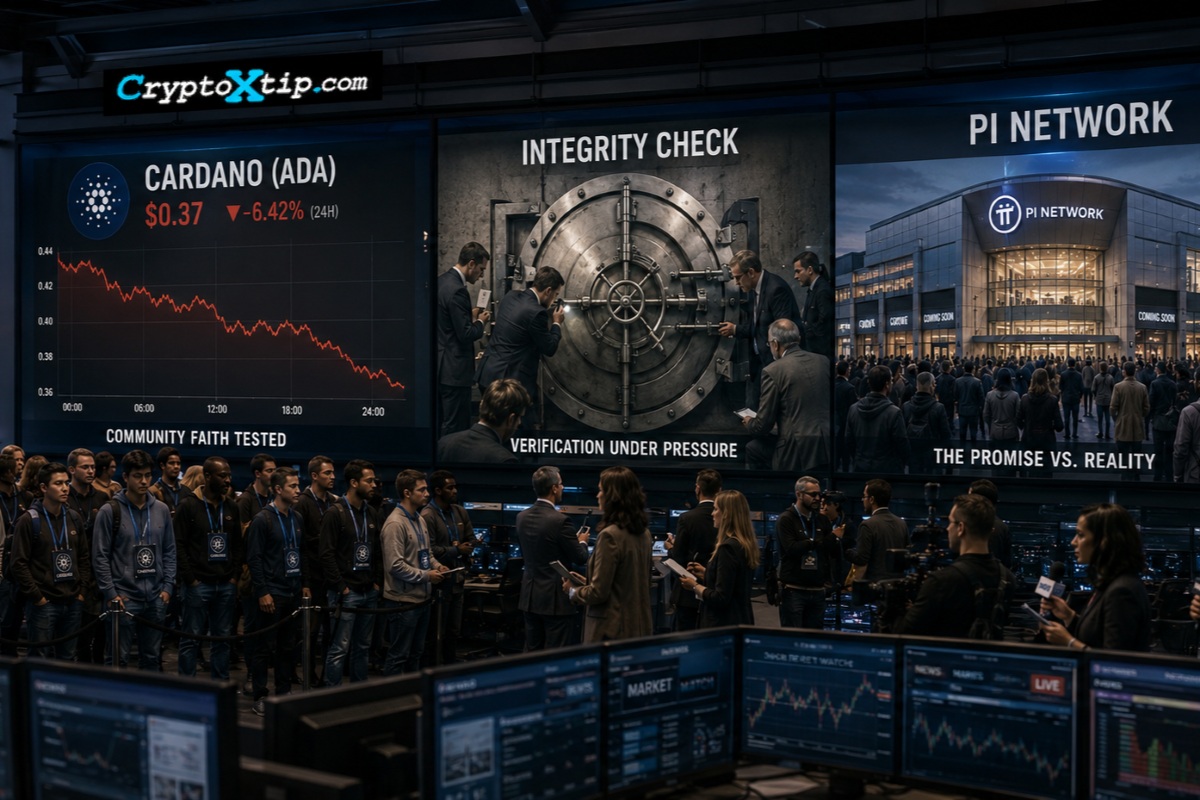
Active Cardano addresses are rising despite ADA weakness, while Zcash confronts a critical security flaw and Pi Network faces renewed doubts.
Crypto markets have a habit of sending mixed signals, but few recent examples illustrate that better than Cardano. Over the past month, ADA has remained under notable pressure, extending a broader period of weakness that has frustrated holders and traders alike. Yet beneath the surface, network activity has been telling a different story.
Recent blockchain data and industry reporting indicate that the number of active Cardano addresses has increased even as ADA struggled to maintain positive price momentum. The divergence has fueled debate over whether market participants are overlooking underlying network engagement or whether users and investors are simply moving in different directions. Recent reports have highlighted a measurable increase in active addresses despite weak price action and ongoing governance-related uncertainty surrounding the ecosystem.
The disconnect arrives during a period when investors are paying closer attention to on-chain activity rather than purely speculative narratives. After several years of market cycles dominated by liquidity surges and rapid sentiment swings, many traders are searching for signals that indicate genuine network usage.
Cardano's situation demonstrates an uncomfortable reality for digital assets: user growth does not always translate into immediate price appreciation. Markets often move according to liquidity, macroeconomic conditions and investor positioning long before fundamentals receive recognition.
Cardano's Activity Puzzle
Recent reports suggest active Cardano addresses rose roughly 14% during late May despite persistent weakness in ADA's market performance. Some observers point to increased ecosystem participation, governance activity and network engagement as potential explanations for the rise in address activity. Others argue that wallet growth alone cannot offset broader concerns about adoption, capital inflows and decentralized application usage.
The debate highlights a recurring challenge in crypto analysis. Active addresses can provide valuable insight into network participation, but they are not a perfect measure of economic activity. A growing number of users may reflect genuine adoption. It can also reflect existing users increasing transactions or interacting with multiple applications.
Still, the contrast between price weakness and user engagement remains noteworthy. In traditional markets, investors often expect stronger fundamentals to support valuations. Crypto frequently ignores that script. Assets can rise dramatically with little usage and decline sharply despite healthy ecosystem metrics.
Cardano supporters argue that the network's development activity, governance transition and expanding infrastructure continue to build long-term foundations. Critics counter that the ecosystem still faces intense competition from larger smart-contract platforms that dominate developer attention, decentralized finance liquidity and user growth.
The truth likely sits somewhere between those positions. Rising activity suggests the network remains relevant to a dedicated user base. Whether that translates into stronger demand for ADA is a separate question entirely.
Zcash Confronts a Security Shock
While Cardano investors are debating the meaning of user growth, the Zcash community has spent the week confronting a far more urgent issue.
A recently disclosed vulnerability in Zcash's Orchard privacy pool triggered significant market volatility and renewed scrutiny of security assumptions within privacy-focused cryptocurrencies. According to multiple reports, the flaw could theoretically have enabled the creation of counterfeit ZEC or facilitated double-spending scenarios within the shielded pool under specific conditions. The vulnerability was discovered during a security review and subsequently patched through an emergency network upgrade. No exploitation has been reported and developers stated that no user funds were lost.
From a technical perspective, the successful identification and remediation of the issue demonstrates that security processes can function effectively. Yet the episode raises uncomfortable questions that extend beyond software engineering.
For privacy-focused networks such as Zcash, trust is inseparable from cryptographic integrity. Users rely on the assumption that monetary supply remains verifiable and resistant to manipulation. Even a theoretical threat to that assumption can have significant consequences for investor confidence.
The controversy is particularly sensitive because Zcash has long positioned itself as a sophisticated privacy solution built upon advanced cryptographic research. The discovery of a flaw that reportedly existed for years before detection naturally invites questions about audit practices, review procedures and the complexity of modern zero-knowledge systems.
Some market participants have praised the transparency surrounding the disclosure and patching process. Others view the event as a reminder that increasingly complex blockchain architectures may create new categories of risk that are difficult to identify before deployment.
In financial markets, confidence can disappear faster than code can be patched. Zcash now faces the challenge of reassuring users that the network's privacy guarantees and monetary integrity remain intact.
Pi Network Reaches Another Difficult Milestone
Pi Network is dealing with a different problem altogether. Rather than a security controversy, the project faces mounting questions about market confidence and long-term sustainability.
Recent market performance has pushed PI toward new lows, reigniting debates that have surrounded the project since its transition toward broader market trading. The token remains significantly below levels reached during earlier periods of optimism, with analysts and traders continuing to question whether adoption can eventually justify previous expectations.
Supporters often point to Pi Network's large community, extensive user onboarding efforts and substantial number of verified participants. Those metrics remain among the project's strongest arguments.
Critics, meanwhile, continue to focus on utility, liquidity and ecosystem development. Their argument is straightforward: large user numbers do not automatically create sustainable value if economic activity remains limited or if demand fails to keep pace with token supply growth.
This tension has become increasingly visible as market enthusiasm has cooled. During bull markets, ambitious visions often receive the benefit of the doubt. During more challenging conditions, investors tend to demand measurable results.
The conversation around Pi Network increasingly resembles a broader crypto market lesson. Communities can attract millions of users, but eventually investors begin asking difficult questions about revenue generation, application usage and long-term incentives.
Those questions are not unique to Pi. They are becoming common across much of the digital asset sector as speculative narratives compete with growing expectations for demonstrable utility.
What Investors Are Watching Now
Taken together, the stories of Cardano, Zcash and Pi Network reveal three different challenges facing altcoins in 2026.
Cardano illustrates the difficulty of converting user engagement into market value. Zcash highlights how security concerns can rapidly alter investor sentiment, even when vulnerabilities are patched before exploitation occurs. Pi Network demonstrates the pressure projects face when community growth must eventually be matched by economic utility.
For traders, these developments reinforce the importance of looking beyond price charts. User activity, network security and ecosystem adoption often provide early signals about a project's underlying health.
At the same time, none of these metrics should be viewed in isolation. Crypto markets remain influenced by liquidity conditions, regulation, macroeconomic trends and investor psychology. A strong network can struggle during unfavorable market conditions, while weak projects can occasionally benefit from speculative momentum.
As noted in additional ecosystem coverage from Article Partners the next phase of market competition may depend less on promises and more on execution. That shift has been discussed for years. Recent events suggest it is finally becoming unavoidable.
What This Means
Cardano's growing address activity suggests user engagement can remain resilient even during price declines, but it does not guarantee a market recovery. Zcash's security incident underscores the importance of transparency and rigorous auditing in privacy-focused networks. Pi Network's continued weakness highlights how community size alone may not be enough to sustain investor confidence.
For investors, the common thread is clear: markets are becoming less willing to reward narratives without evidence. Adoption, security and utility are increasingly moving from marketing slogans to measurable requirements.
Related Articles
More stories you may want to explore.



Sponsored Placements











