Bitcoin Dominance Rises as Altcoins Struggle for Attention
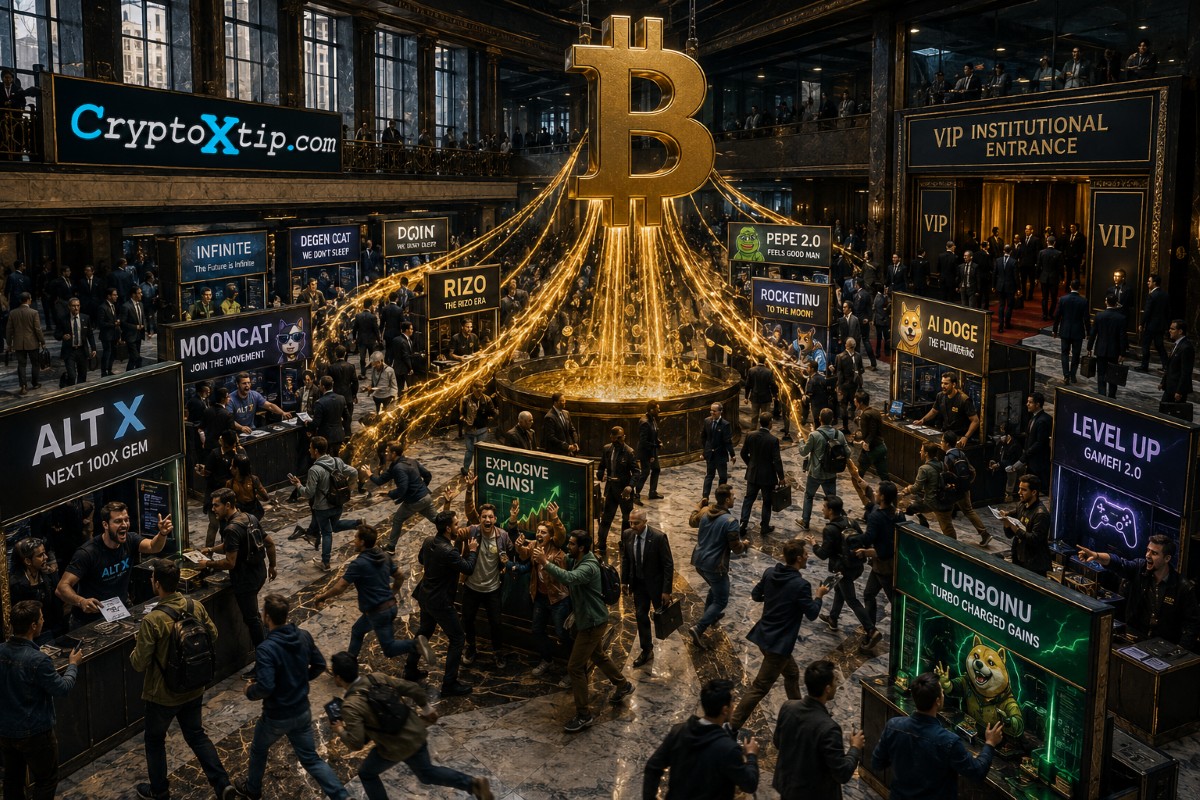
Bitcoin's growing market share is drawing capital away from many altcoins, while speculative token rallies highlight both opportunity and rising risk.
Bitcoin's dominance of the cryptocurrency market is climbing once again, reinforcing a trend that has become increasingly familiar during the current cycle. Capital is flowing toward the industry's largest and most established digital asset, while many altcoins are finding it difficult to keep pace.
The shift reflects a market that remains selective rather than broadly optimistic. Investors continue to show interest in cryptocurrency exposure, but much of that demand is concentrated in Bitcoin rather than spreading evenly across alternative digital assets. As a result, the gap between winners and losers within the crypto market has widened considerably.
That does not mean altcoins have stopped moving. Quite the opposite. A number of smaller tokens have delivered extraordinary gains over short periods, with some posting returns measured in hundreds of percentage points. Yet those dramatic rallies have occurred in isolated pockets of the market rather than as part of a broad-based altcoin surge.
The distinction matters. Previous crypto cycles often featured widespread participation where hundreds of assets rallied simultaneously. The current environment looks more selective, more fragmented and arguably more difficult for investors attempting to identify sustainable opportunities.
Bitcoin Continues to Absorb Market Liquidity
Bitcoin dominance, a metric measuring Bitcoin's share of the total cryptocurrency market capitalization, has remained elevated throughout much of the current cycle. Market analysts increasingly view this as evidence that investors prefer the relative safety and liquidity of Bitcoin over smaller digital assets. Recent market data continues to show Bitcoin holding a majority share of crypto market value, while many altcoins struggle to outperform.
Several structural factors help explain the trend. The arrival of spot Bitcoin ETFs fundamentally changed capital flows within the industry. Institutional investors now have easier access to Bitcoin through regulated investment vehicles, creating demand channels that do not necessarily extend to smaller tokens.
This dynamic has introduced what some market participants describe as a "winner-takes-most" environment. Instead of capital moving freely across thousands of assets, liquidity increasingly concentrates around the largest and most trusted names.
In many ways, crypto is beginning to resemble traditional financial markets. Investors facing uncertainty often gravitate toward the largest and most liquid assets first. Bitcoin benefits from that behavior in much the same way large-cap technology stocks often attract capital during periods of market caution.
The irony is difficult to miss. An industry originally built around decentralization increasingly finds itself orbiting around a handful of dominant assets.
Why Many Altcoins Are Falling Behind
The underperformance of many altcoins is not necessarily a reflection of weak technology or poor development activity. Instead, it often reflects changing investor priorities.
Risk appetite remains uneven across financial markets. Global macroeconomic uncertainty, evolving monetary policy expectations and periodic geopolitical tensions continue influencing investment decisions. Under those conditions, investors frequently reduce exposure to higher-risk assets before cutting positions in more established holdings.
Bitcoin occupies a unique position within the digital asset ecosystem. It is increasingly viewed as the benchmark cryptocurrency, attracting both institutional participation and media attention. That status creates a self-reinforcing cycle where new capital often enters Bitcoin before considering alternative assets.
Historical market patterns show that periods of rising Bitcoin dominance have frequently coincided with weaker relative performance among altcoins. Recent market indicators and altcoin season measurements continue to suggest that many alternative cryptocurrencies are lagging behind Bitcoin rather than leading the market.
For altcoin investors, this environment can be frustrating. A strong Bitcoin market does not automatically translate into strong altcoin performance. In some cases, Bitcoin's success can actively drain liquidity from smaller projects.
The Return of Speculative Trading
Despite the broader challenges facing altcoins, speculation remains alive and well. Certain low-capitalization tokens have generated remarkable gains in recent weeks, attracting traders searching for outsized returns.
These explosive rallies often emerge from a combination of social media momentum, limited circulating supply, exchange listings and rapidly shifting market narratives. In some cases, relatively small amounts of capital can trigger substantial price movements due to limited liquidity.
Such moves inevitably attract attention. Stories of overnight gains continue to circulate across crypto communities, drawing fresh participants into highly speculative segments of the market.
Yet experienced investors tend to view these episodes with caution. Extreme upside potential rarely exists without equally significant downside risk. Tokens capable of rising several hundred percent within days are often capable of losing a similar proportion of their value just as quickly.
Crypto markets have always rewarded bold speculation, but they have also maintained a remarkable ability to punish excessive confidence. Many investors discover this relationship only after the fact.
Warnings Are Growing Louder
As speculative activity accelerates in select areas of the market, warnings from analysts and industry observers have become more frequent.
One concern involves liquidity. Smaller tokens often trade on limited volume, making prices vulnerable to sudden swings. A rapid surge in buying can create dramatic gains, but a rush toward the exit can produce equally dramatic collapses.
Another issue is market concentration. While Bitcoin continues attracting institutional capital, many speculative altcoin rallies remain largely retail-driven. That difference can create fragile market structures that depend heavily on momentum rather than fundamental adoption.
The growing influence of ETFs and institutional investment may also be reshaping traditional altcoin cycles. Some analysts argue that Bitcoin now absorbs a larger share of incoming capital than in previous market cycles, reducing the amount available for broad altcoin participation. Recent ETF trends and institutional allocation patterns support the view that investors remain focused on larger crypto assets.
This does not mean altcoin opportunities have disappeared. It simply means investors may need to become more selective than they were during earlier periods when nearly every segment of the market moved higher simultaneously.
Selective Sectors Continue to Attract Interest
Even as broad altcoin performance remains uneven, certain themes continue attracting capital. Projects linked to artificial intelligence, decentralized finance, blockchain infrastructure and real-world asset tokenization have maintained investor attention despite the challenging environment.
These sectors benefit from narratives that extend beyond pure speculation. Investors increasingly seek projects that demonstrate measurable activity, user growth or practical applications rather than relying solely on market momentum.
That shift may represent a sign of maturation within the industry. Crypto markets remain highly speculative, but capital allocation is becoming somewhat more discerning.
For readers following curated crypto projects, this distinction is increasingly important. Not every token benefiting from a temporary rally is building long-term value, and not every project with strong fundamentals receives immediate market recognition.
The challenge for investors is separating sustainable adoption from short-term excitement. That task has never been simple, but it becomes even more important during periods when capital is concentrated in Bitcoin.
What This Means
Bitcoin's rising dominance highlights a market that remains cautious despite ongoing interest in digital assets. Investors continue directing capital toward the most established cryptocurrency, leaving many altcoins struggling to attract sustained demand.
At the same time, pockets of speculation remain active. Smaller tokens are still capable of delivering spectacular gains, but those opportunities come with significant risks and increasingly volatile trading conditions.
The current cycle appears different from the broad altcoin booms that defined earlier crypto markets. Instead of indiscriminate buying across thousands of assets, capital is becoming more selective and increasingly influenced by institutional behavior.
For investors, the message is relatively straightforward. Bitcoin's strength does not guarantee an imminent altcoin season, and isolated token rallies should not be mistaken for a market-wide trend. Until liquidity begins rotating more broadly beyond Bitcoin, caution may remain the defining characteristic of the altcoin landscape.
Related Articles
More stories you may want to explore.



Sponsored Placements