
Algorand Bets on Quantum Security as XRP Struggles
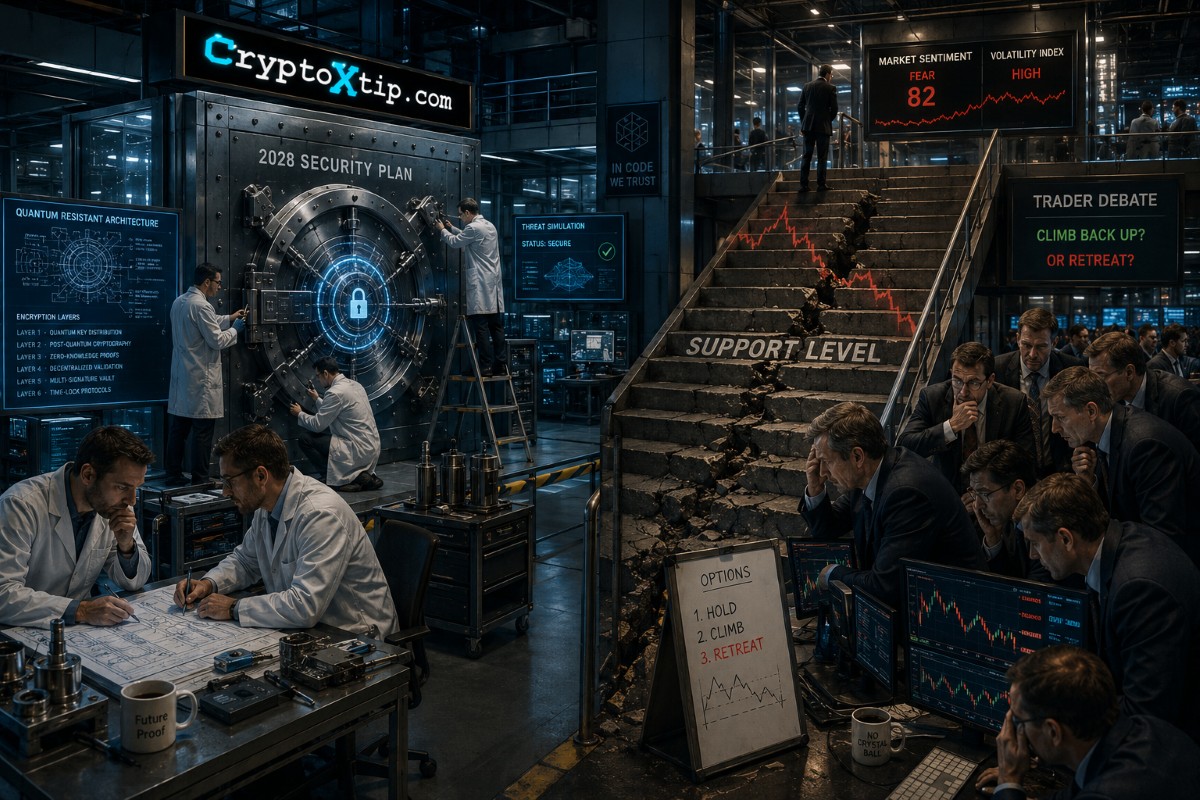
Algorand is preparing for a post-quantum future while XRP remains under technical pressure, highlighting two very different challenges facing altcoin investors.
The altcoin market rarely focuses on a single narrative for long. One week investors are discussing artificial intelligence, the next they are debating regulatory developments or liquidity flows. This week, attention has split between two stories that could hardly be more different.
Algorand has unveiled a roadmap aimed at achieving quantum resistance by 2028, placing the project among a growing group of blockchain networks preparing for a future in which quantum computing could challenge today's cryptographic standards.
At the same time, XRP has remained under selling pressure after losing an important technical support zone and failing to sustain a previous breakout attempt. The weakness has reinforced concerns among traders who were hoping the token could build stronger momentum following months of legal and market-related developments.
Together, the two stories offer an interesting snapshot of the current altcoin landscape. While some projects are focused on technological challenges that may emerge years from now, others remain occupied by immediate market realities.
Investors are paying attention to both.
Why Quantum Computing Matters to Blockchain
Quantum computing has long occupied a curious place within cryptocurrency discussions. It is often described as one of the greatest future threats to blockchain security, yet many experts believe practical risks remain years away.
That combination of uncertainty and potential significance has made quantum computing one of the industry's most debated long-term topics.
Modern blockchains rely heavily on cryptographic systems that protect wallets, secure transactions, and verify ownership of digital assets. These systems have proven highly effective against traditional computing methods.
The concern is that sufficiently advanced quantum computers could eventually perform certain calculations dramatically faster than conventional machines, potentially weakening cryptographic algorithms that underpin much of today's digital infrastructure.
Importantly, the threat extends far beyond cryptocurrency.
Banks, governments, cloud providers, defense systems, and internet services are all examining post-quantum security solutions. Blockchain networks are simply part of a much broader technological transition that may unfold over the coming decades.
The challenge is not whether quantum computing deserves attention. The challenge is determining when preparation should begin.
Algorand Moves Early
Algorand appears to believe the answer is now.
The project's newly announced roadmap outlines a multi-year effort aimed at strengthening network resilience against future quantum threats. The plan includes research, infrastructure upgrades, and the integration of cryptographic techniques designed to remain secure even in a world where large-scale quantum computing becomes practical.
Supporters argue that taking action early provides important advantages.
Blockchain networks often require extensive coordination when implementing major upgrades. Changes involving core cryptographic systems are especially complex because they affect wallets, validators, applications, and users throughout the ecosystem.
Starting the process years before quantum computing becomes a realistic threat may reduce disruption and improve long-term security.
There is also a reputational component.
As institutional interest in digital assets continues to grow, security remains one of the most important considerations for enterprises evaluating blockchain infrastructure. Demonstrating a proactive approach to emerging risks may strengthen confidence among developers and organizations considering long-term adoption.
In many ways, preparing for quantum computing resembles buying insurance. The hope is that the protection will not be needed anytime soon, but waiting until the risk becomes urgent may prove considerably more expensive.
Skepticism Remains
Not everyone believes quantum resistance should be a top priority today.
Some researchers argue that practical quantum threats remain sufficiently distant that blockchain projects face more immediate challenges deserving attention. Scalability, user adoption, interoperability, and regulatory compliance continue to influence network success on a daily basis.
From this perspective, allocating significant resources toward hypothetical future risks may offer limited short-term value.
Others note that the timeline for meaningful quantum breakthroughs remains highly uncertain. Predictions have repeatedly shifted as researchers confront technical obstacles associated with building stable and scalable quantum systems.
That uncertainty creates a difficult balancing act for blockchain developers.
Move too slowly and networks risk future vulnerability. Move too aggressively and valuable resources may be diverted away from current priorities.
Algorand's roadmap reflects one possible answer: begin preparing now while maintaining a long-term implementation horizon.
XRP Faces a Very Different Problem
While Algorand is focused on technological risks that may emerge years from now, XRP investors are dealing with a far more immediate challenge.
The token has struggled to maintain upward momentum following an unsuccessful attempt to break through key resistance levels. The rejection weakened bullish sentiment and contributed to a decline below an important technical support area monitored by many traders.
Technical analysis remains only one component of market behavior, but support and resistance levels often influence short-term sentiment because they shape trader expectations regarding risk and opportunity.
When a widely watched support zone fails, market participants frequently become more cautious. Some reduce exposure, while others wait for stronger evidence that a new trend is developing.
That dynamic appears to be contributing to XRP's current weakness.
The pressure arrives at a time when broader crypto markets remain heavily influenced by macroeconomic uncertainty and Federal Reserve policy expectations. In such environments, investors often become more selective regarding which assets they are willing to support.
Investor Psychology Takes Center Stage
One of the more interesting aspects of XRP's recent performance is the role of investor expectations.
The asset has spent years attracting one of the most dedicated communities in cryptocurrency. Optimism surrounding legal developments, institutional adoption possibilities, and cross-border payment use cases has repeatedly fueled bullish narratives.
That enthusiasm can become a double-edged sword.
When expectations rise significantly, markets often require increasingly strong catalysts to justify additional gains. If those catalysts fail to materialize quickly enough, disappointment can trigger selling pressure even in the absence of fundamentally negative news.
Markets frequently punish unmet expectations more aggressively than bad news itself.
The recent technical weakness appears to reflect that reality. Investors are not necessarily abandoning the project's long-term vision, but they are demanding stronger evidence before committing additional capital.
Two Stories, One Market
At first glance, Algorand's quantum-security initiative and XRP's technical struggles appear unrelated.
Yet both stories reveal something important about the evolving cryptocurrency market.
Investors are increasingly evaluating projects through multiple lenses simultaneously. Technological innovation, governance quality, security planning, market structure, liquidity conditions, and adoption metrics all play a role in determining sentiment.
A project can attract attention because it is solving a future problem, as Algorand hopes to do. Another can remain under pressure because traders are focused on near-term price action, as XRP currently demonstrates.
As highlighted in additional ecosystem coverage available through Crypto X Tip the altcoin sector continues to evolve beyond simple speculation toward a more nuanced environment where technological progress and market psychology increasingly intersect.
That evolution may ultimately benefit investors, even if it makes the market more complicated to navigate.
What This Means
Algorand's push toward quantum resistance highlights the growing importance of long-term blockchain security as the industry prepares for potential advances in computing technology. While practical quantum threats may still be years away, proactive planning is becoming a competitive differentiator. Meanwhile, XRP remains under selling pressure after losing key technical support, reflecting continued caution among traders despite the project's established market presence. Together, these developments illustrate how altcoin investors are increasingly balancing future innovation with present-day market realities.
Related Articles
More stories you may want to explore.



Sponsored Placements











