
Governments Try to Tame the Wild West (Again)
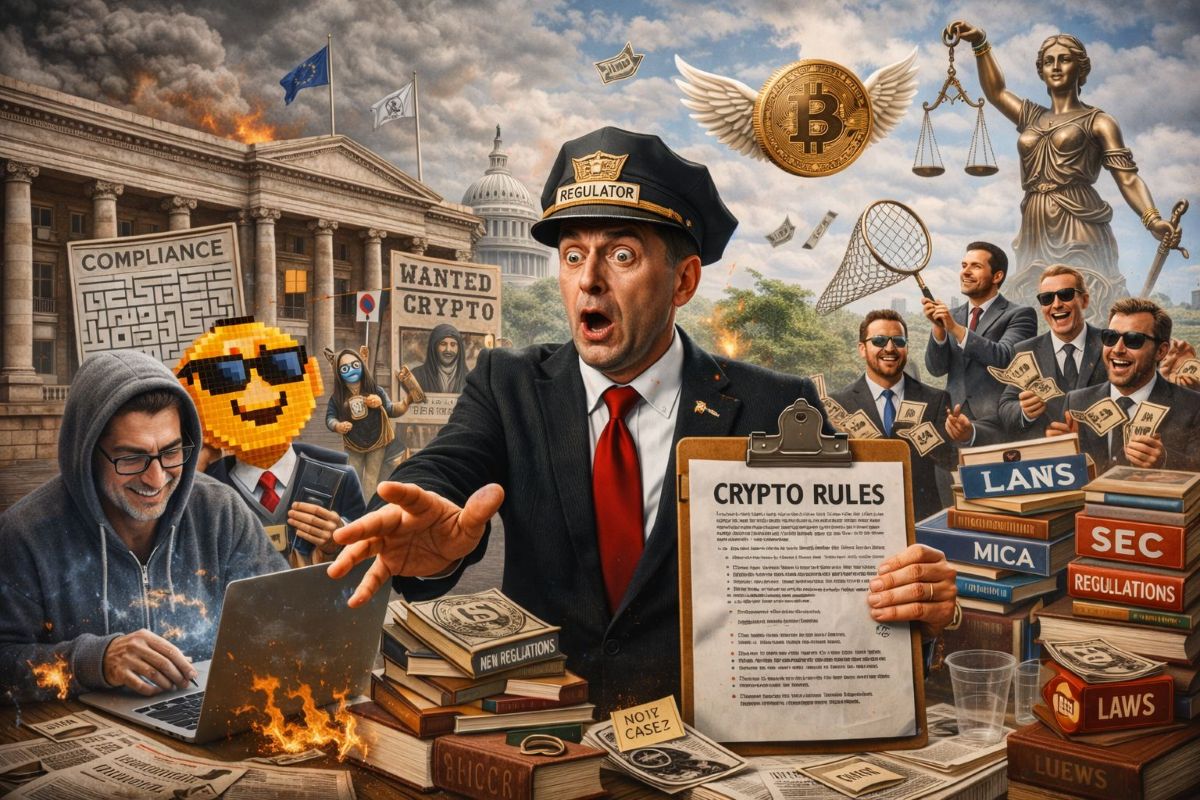
Regulators sharpen rules while crypto keeps running ahead, leaving lawmakers chasing digital tumbleweeds.
If the crypto industry had a favorite sport, it would probably be regulatory dodgeball. Governments throw rules, crypto entrepreneurs duck, developers launch a new token, and everyone pretends the game is under control. Over the past months, regulators around the world have once again stepped onto the stage with fresh proposals, warnings, frameworks, and the occasional dramatic press conference about “protecting investors.” Meanwhile, the crypto market watches from the sidelines like a mischievous teenager wondering which rule it will accidentally break next.
The United States: Regulation by Puzzle Pieces
In the United States, crypto regulation still resembles a giant jigsaw puzzle where several agencies insist they own the same corner pieces. The Securities and Exchange Commission (SEC) continues arguing that many crypto tokens look suspiciously like securities, while other regulators focus on commodities, banking rules, or stablecoin oversight. The result is a fascinating legal debate where everyone agrees regulation is needed, but nobody quite agrees on the exact rulebook.
Recent discussions have centered around clearer frameworks for exchanges, token classifications, and custody rules. Regulators say the goal is to protect investors and prevent market manipulation. Critics say the process often feels like trying to write traffic laws for flying cars that haven’t been invented yet. Either way, the message from Washington is clear: crypto will eventually have rules—possibly written sometime before the next Bitcoin halving.
Europe: The “MiCA” Rulebook Arrives
Across the Atlantic, the European Union has taken a slightly different approach: instead of debating endlessly, it produced a giant regulatory manual known as MiCA (Markets in Crypto-Assets). The idea is simple—create a unified framework so crypto companies know what rules apply across the EU instead of navigating dozens of national regulations.
MiCA focuses on licensing crypto service providers, regulating stablecoins, and improving transparency for investors. In theory, this could make Europe one of the more predictable places for crypto companies to operate. In practice, it also means startups must read what appears to be approximately 700 pages of legal text before launching a meme coin about a dog wearing sunglasses.
Supporters argue the rules will bring legitimacy and institutional trust. Skeptics worry that overly strict requirements might slow innovation. But at least Europe now has something the crypto world rarely sees: a single regulatory playbook.
Asia and the Global Race for Crypto Rules
Meanwhile, several Asian financial hubs are experimenting with their own versions of crypto regulation. Places like Singapore, Hong Kong, and the United Arab Emirates are attempting a delicate balancing act: encourage innovation while avoiding the kind of chaos that gives regulators migraines.
Some governments see crypto as an opportunity to attract fintech investment, while others remain cautious after previous market collapses. The general trend, however, is clear: instead of banning crypto outright, many jurisdictions are trying to shape it into something that resembles a regulated financial industry.
This has created a curious global competition. Countries want to become the next crypto hub—but preferably without accidentally hosting the next spectacular exchange meltdown.
The Market Reaction: Mild Panic, Followed by a Shrug
Whenever regulators announce new rules, the crypto market initially reacts with its usual dramatic flair. Prices wobble, analysts post urgent threads on social media, and traders briefly imagine the end of decentralized finance as we know it.
Then something interesting happens: the market adjusts and continues moving. Developers modify platforms, exchanges add compliance tools, and investors eventually return to watching charts instead of legal documents. The crypto industry has become surprisingly resilient to regulatory news—perhaps because it has heard similar warnings many times before.
In fact, some analysts believe regulation could ultimately strengthen the industry. Clearer rules might reduce uncertainty and make it easier for large institutions to participate. After all, major investment firms tend to prefer environments where the legal framework is slightly more detailed than “please don’t crash the economy.”
The Big Question: Control or Coexistence?
The central debate remains the same: can governments successfully regulate a technology designed to operate without central control? Regulators aim to protect investors and maintain financial stability. Crypto enthusiasts argue that decentralization is precisely the point.
The likely outcome lies somewhere in between. Exchanges, custodians, and large platforms will probably operate under increasingly strict rules, while decentralized protocols continue experimenting in the open-source wilderness.
In other words, the Wild West may eventually get sheriffs—but the frontier probably isn’t disappearing anytime soon.
For now, the crypto market continues its favorite routine: regulators write rules, developers write code, traders watch price charts, and everyone insists they fully understand what’s happening. They don’t—but that has never stopped crypto before.
Related Articles
More stories you may want to explore.



Sponsored Placements











