
Crypto Mining’s New Gold Rush Comes With Water Cooling and Fewer Illusions
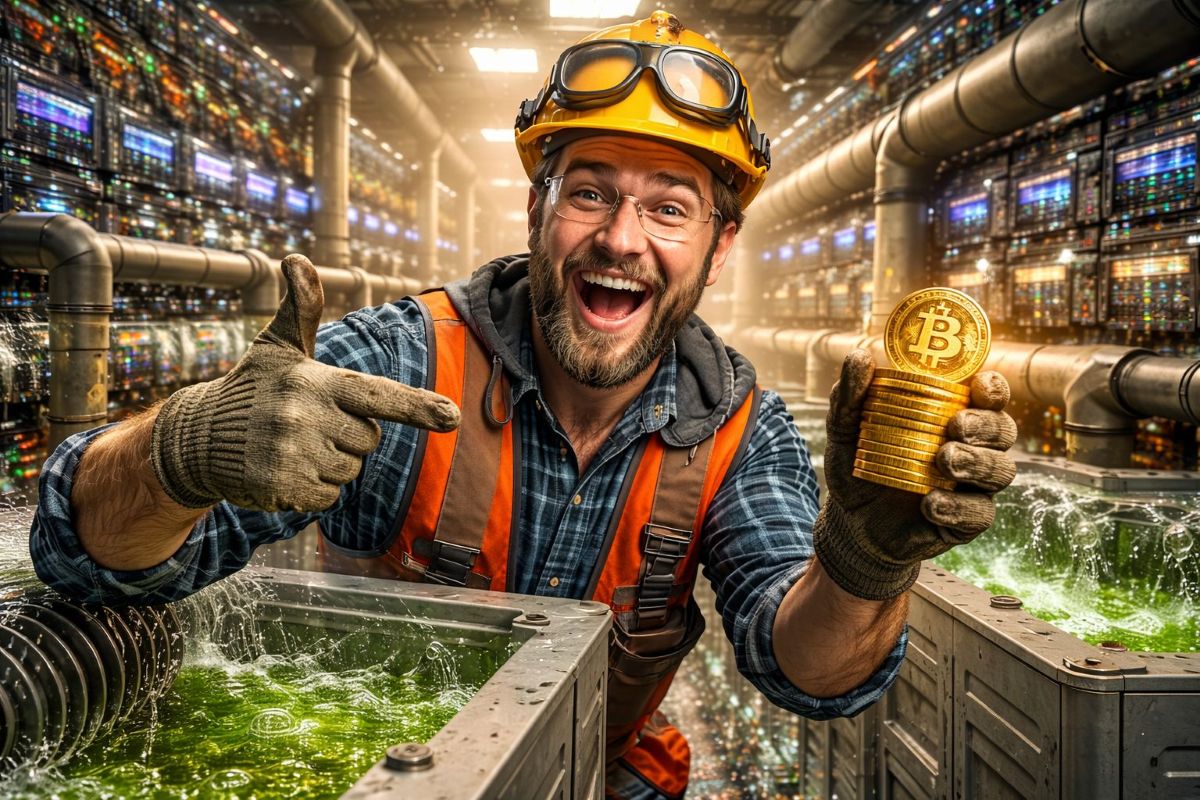
Higher difficulty, smarter machines, greener power, and one very expensive race to stay profitable.
If you thought crypto mining in 2026 would be a sleepy room full of whirring boxes and one guy in flip-flops saying “trust the algorithm,” I have delightful news: mining has become far more dramatic. It now looks less like a hobby and more like a cross between heavy industry, thermodynamics, and a survival reality show where the prize is remaining marginally profitable for another month.
The biggest headline is simple: mining did not die. Again. It merely put on a hard hat, installed better cooling, hired an accountant, and started speaking in terrifyingly efficient numbers. The age of “plug in a machine and become a wizard” is over. The age of “calculate energy prices, facility design, firmware tuning, and fleet efficiency before breakfast” is very much here.
Bitcoin Mining Is Still the Main Event
As of today, Bitcoin remains the heavyweight champion of proof-of-work mining news. The block reward is still 3.125 BTC, which means miners are living in the post-halving world where every coin feels more precious and every electricity bill feels more personal. Meanwhile, network difficulty remains extremely high, proving that miners as a species are stubborn, inventive, and apparently allergic to taking a day off.
In plain English: it is harder than ever to win the mining race, and yet the race keeps attracting bigger shoes, bigger warehouses, and bigger invoices. That is why the modern mining story is less about “Can I mine?” and more about “Can I mine efficiently enough to avoid becoming an inspirational warning for others?”
The Machines Are Getting Ridiculously Serious
One of the most interesting trends is the rapid push toward more efficient ASIC hardware. Manufacturers are no longer selling just “fast” machines. They are selling machines that whisper, with corporate confidence, “Yes, I consume a small power station’s worth of electricity, but look how elegant my joules-per-terahash are.”
Bitmain’s newer generation systems, including the S23 family, show how the industry keeps chasing better efficiency while pushing hashrate higher. Canaan’s fresh A16 line is doing the same, with specs that make last-generation rigs look like they should be displayed in a museum between a fax machine and a motivational poster about decentralization.
The result is brutal but fascinating: older machines are not necessarily dead, but they are being judged very harshly by modern economics. In mining, nostalgia is expensive.
Cooling Is No Longer Just a Fan and a Prayer
Another major development is cooling. Or, more accurately, the realization that blasting hot air into a room and hoping for the best is not a long-term strategy. Hydro cooling and immersion systems keep gaining attention because modern mining rigs produce enough heat to make toast, regret, and possibly local weather.
This is not just about comfort. Better cooling can mean greater stability, denser deployments, and improved efficiency at scale. In other words, mining farms are increasingly designed like engineering projects rather than glorified garages. The humble desktop fan has been replaced by infrastructure, fluid management, and serious planning. Somewhere, a home miner is reading this while hugging an extension cord.
Greener, Cleaner, and Still Arguing Online
One of the most talked-about shifts is energy sourcing. The conversation has matured from loud ideological food fights into a more practical question: what power can miners actually secure at the right price, with the right reliability, and with the least political headache?
That is why mining is increasingly tied to stranded energy, flexible loads, natural gas mitigation projects, hydro, wind, solar, and nuclear-backed grids. This does not mean the environmental debate has vanished—this is crypto, so debates never vanish—but it does mean the industry is becoming more data-driven and more serious about how it presents its energy mix.
The funny part is that mining now sometimes sounds like an energy conference accidentally wearing a Bitcoin hoodie. You show up expecting laser eyes and memes, and instead hear discussions about load balancing, curtailment, power markets, and infrastructure financing.
Geography Is Getting Weird Again
Mining geography also remains unpredictable. The industry spent years redistributing itself after crackdowns and policy shifts, but the map keeps changing. Energy prices, regulation, hardware access, and political tolerance still decide where miners go next. That means mining is not just a technology story anymore. It is also a logistics story, a policy story, and occasionally a “How did that warehouse end up there?” story.
Some regions want the jobs and infrastructure spending. Others want the tax revenue. Others want miners gone by lunchtime. The global mining business has therefore become a strange game of chess played with transformers, permits, and weather forecasts.
So What’s Actually New in Mining?
The short answer: mining in 2026 is becoming more professional, more competitive, and much less romantic. The winners are increasingly the operators who combine efficient hardware, disciplined treasury management, clever energy sourcing, and cooling systems that do not sound like a jet preparing for takeoff.
For smaller players, the dream is still alive—but it now comes with spreadsheets. Lots of spreadsheets. For larger operators, the game is about squeezing performance from every watt and every rack position while surviving the constant pressure of network difficulty and market volatility.
So yes, crypto mining is still exciting. It is just exciting in a very adult way now: fewer moon chants, more infrastructure. Fewer miracles, more megawatts. And somehow, that may be the most interesting plot twist of all.
Related Articles
More stories you may want to explore.

Sponsored Placements











