
Mining Sector Faces a New Adaptation Test
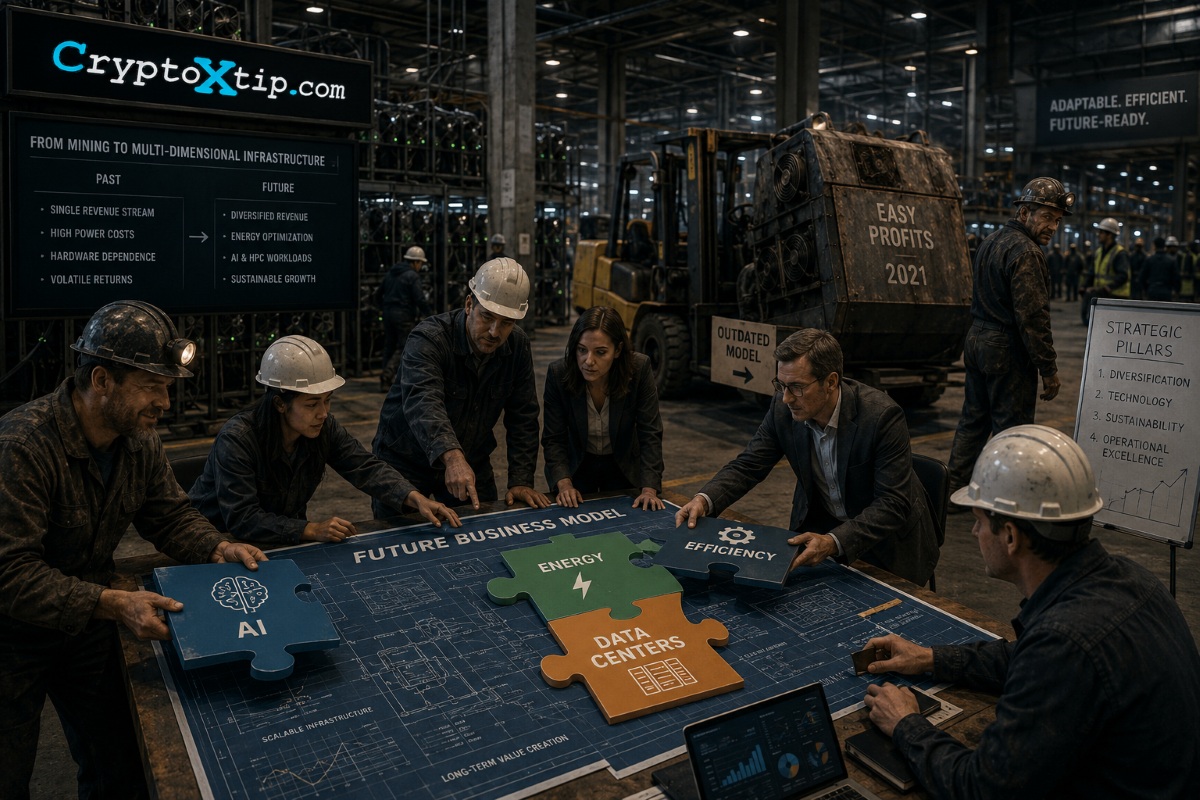
Developments surrounding Zcash-linked organizations and broader restructuring efforts are highlighting how mining companies are adjusting to a more demanding market environment.
The cryptocurrency mining industry has never been particularly forgiving. Profitability can rise quickly during favorable market conditions, only to disappear just as rapidly when energy costs increase, rewards decline, or investor sentiment shifts.
That reality has become especially evident in the current cycle, where miners are navigating a combination of post-halving economics, tighter financing conditions, and growing competition for capital.
Recent attention has turned toward developments involving organizations connected to the Zcash ecosystem, alongside restructuring efforts taking place across various parts of the mining sector. While these events differ in scope and context, they point toward a broader question investors continue to ask: can mining companies successfully adapt to a market that increasingly rewards efficiency over scale alone?
The answer may determine which firms emerge stronger over the coming years and which become examples of how quickly industry conditions can change.
For mining operators, adaptation is no longer a strategic advantage. It is becoming a requirement for survival.
A Sector Under Pressure
The mining industry entered the current period already facing significant challenges.
Bitcoin's most recent halving reduced block rewards, immediately lowering revenue potential for miners across the network. While halvings are expected and historically have been followed by periods of market expansion, the short-term effect is often painful.
Revenue declines occur instantly. Cost reductions rarely do.
Electricity expenses, infrastructure maintenance, hardware upgrades, labor costs, and financing obligations continue regardless of market conditions. As a result, many operators have spent the past year reevaluating business models and searching for ways to improve efficiency.
This environment has created growing interest in corporate restructuring, strategic partnerships, asset sales, and operational optimization programs throughout the industry.
Mining is increasingly resembling a mature industrial sector rather than the frontier-style business many investors associated with crypto's earlier years.
Zcash Ecosystem Developments Draw Attention
Among the stories attracting attention are developments involving organizations linked to the Zcash ecosystem.
Zcash occupies a unique position within the cryptocurrency landscape due to its longstanding focus on privacy-enhancing technology and advanced cryptographic research. The project's infrastructure has historically relied on a combination of community support, technical development, and ecosystem funding mechanisms.
Recent discussions surrounding organizational restructuring and future funding priorities have renewed investor focus on how blockchain ecosystems maintain long-term sustainability.
Although the specifics differ from traditional mining operations, the broader themes remain familiar. Resource allocation, operational efficiency, governance decisions, and financial sustainability are becoming increasingly important across the entire digital asset sector.
Investors are paying attention because these developments may offer insight into how specialized blockchain ecosystems adapt when market conditions become more demanding.
In many ways, the challenges facing ecosystem organizations and mining firms are becoming increasingly similar. Both must demonstrate that they can create sustainable value while operating within tighter financial constraints.
The Era of Easy Capital Has Ended
One of the defining characteristics of the current mining environment is the reduced availability of easy capital.
During previous market cycles, rapid asset appreciation often provided miners with multiple financing options. Rising cryptocurrency prices improved balance sheets, increased investor confidence, and created opportunities to expand operations aggressively.
Today's environment is markedly different.
Investors have become more selective. Profitability metrics receive greater scrutiny. Capital allocation decisions are examined more carefully than during periods of widespread market optimism.
As a result, mining companies are increasingly expected to justify growth plans through operational performance rather than relying solely on favorable market conditions.
This shift has encouraged restructuring efforts throughout the industry. Companies are reviewing debt obligations, consolidating operations, renegotiating contracts, and exploring alternative revenue sources.
For management teams, efficiency has become one of the most valuable assets available.
Diversification Becomes a Strategic Priority
A notable trend emerging across the mining sector is diversification.
Several mining companies have begun expanding beyond traditional cryptocurrency production into adjacent businesses such as artificial intelligence infrastructure, high-performance computing, data center services, and energy management.
The motivation is relatively straightforward.
Mining revenue remains highly dependent on factors outside a company's control, including market prices, network difficulty, and protocol-level reward structures. Diversified revenue streams can help reduce dependence on those variables.
Supporters argue that this approach creates more resilient business models capable of withstanding market downturns.
Critics caution that diversification can dilute strategic focus and expose companies to unfamiliar operational risks. Expanding into new industries is rarely as simple as adding a new revenue line to a presentation slide.
Nevertheless, the trend appears likely to continue as firms seek greater stability.
The mining industry increasingly resembles a group of companies searching for ways to become less dependent on mining itself.
What Investors Are Watching
For investors evaluating mining-related opportunities, several key indicators have become particularly important.
Energy costs remain near the top of the list. Access to reliable and inexpensive power continues to be one of the strongest competitive advantages available to mining operators.
Balance-sheet strength is another major consideration. Companies with manageable debt levels and adequate liquidity generally possess greater flexibility during challenging periods.
Investors are also paying close attention to management execution.
The ability to control costs, allocate capital effectively, and adapt to changing market conditions often matters as much as the underlying assets being mined.
Recent restructuring initiatives across various projects and organizations have reinforced this reality. Markets increasingly reward operational discipline while showing less patience for inefficient business models.
In a sector known for technological innovation, basic financial management has become surprisingly fashionable.
Mining's Long-Term Outlook
Despite current challenges, the long-term outlook for mining remains closely tied to the broader development of digital asset markets.
As blockchain networks continue to evolve, mining and validation infrastructure will remain essential components of ecosystem security and operation.
The question is not whether infrastructure providers will remain necessary. The question is which business models will prove most sustainable.
Some firms will likely succeed through scale and operational efficiency. Others may differentiate themselves through technological innovation, energy optimization, or diversified revenue strategies.
Many will continue experimenting with combinations of all three.
The current restructuring efforts visible across parts of the industry may ultimately be viewed as a transitional phase rather than a sign of decline. Markets often force industries to mature by eliminating inefficiencies and rewarding adaptability.
As highlighted in additional ecosystem coverage available through Crypto X Tip periods of industry adjustment frequently reveal which organizations possess durable competitive advantages and which were benefiting primarily from favorable market conditions.
What This Means
Developments involving Zcash-linked organizations and broader restructuring efforts across the mining sector underscore a common theme: adaptation has become the industry's defining challenge. Rising operational pressures, tighter financing conditions, and changing investor expectations are forcing companies to rethink business models and prioritize efficiency. While some firms are diversifying into adjacent sectors and optimizing operations, others continue searching for sustainable paths forward. For investors, the current environment offers a valuable test of which mining-related businesses can evolve alongside a rapidly maturing digital asset market.
Related Articles
More stories you may want to explore.



Sponsored Placements











