Crypto Mining Evolves as Energy Debates, Efficiency, and Scale Dominate Industry
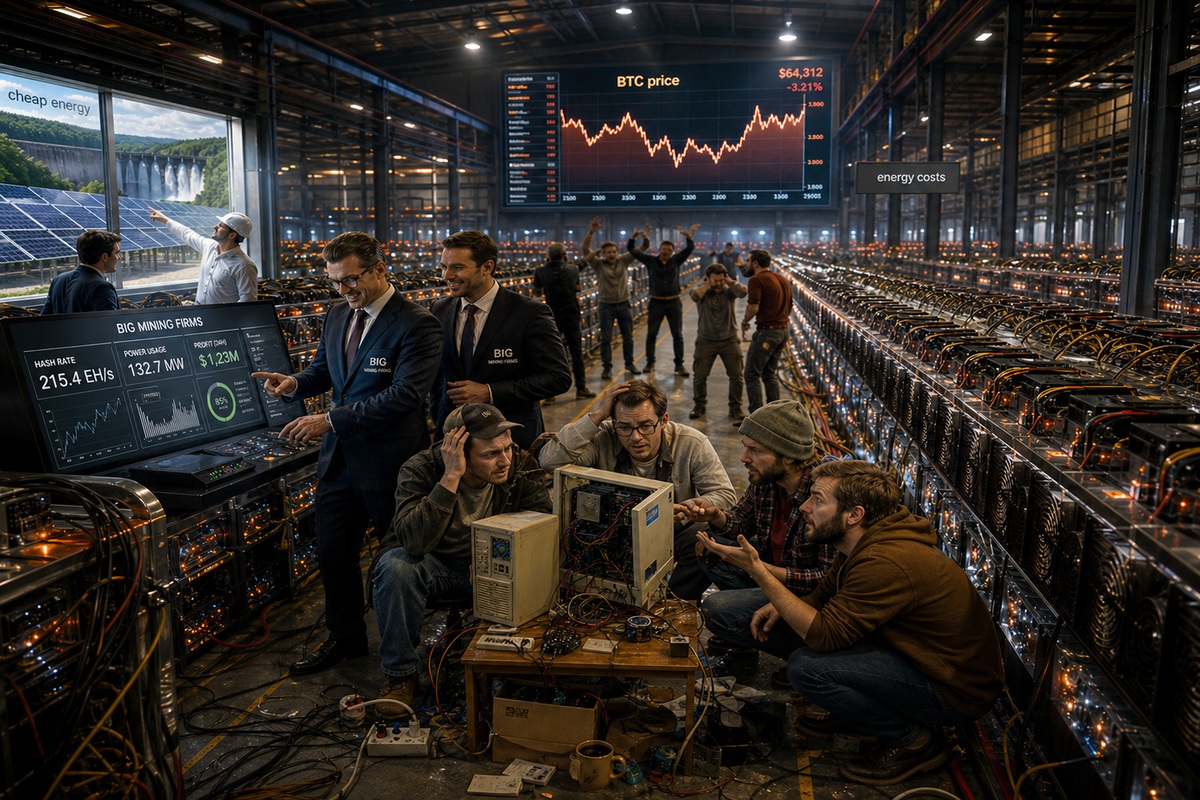
Mining shifts toward efficiency, sustainability, and large-scale industrial competition globally.
The crypto mining industry is entering a new era—one defined less by basement rigs and more by industrial-scale operations that sound like they belong in a sci-fi movie. Gone are the days when you could mine coins on a gaming PC while also pretending to work from home. Today, mining is serious business, and the stakes are higher than ever.
Across major crypto news platforms, one narrative stands out: mining is consolidating. Large players are expanding, smaller operators are struggling to keep up, and efficiency is becoming the name of the game. It’s less “plug and play” and more “optimize or perish.”
From Hobby to Industry: Mining Grows Up
Crypto mining has come a long way from its early days. What started as an experimental activity for tech enthusiasts has transformed into a global industry with massive data centers, sophisticated cooling systems, and energy strategies that would impress utility companies.
Major mining firms are now operating facilities that span entire warehouses—or even multiple locations across continents. These operations are designed for one purpose: maximizing output while minimizing costs. Because in mining, margins matter, and inefficiency is expensive.
It’s a bit like turning a lemonade stand into a multinational corporation—except the lemonade is Bitcoin, and the competition is fierce.
Energy Debate: Still the Elephant in the Room
No discussion about mining would be complete without mentioning energy consumption. The debate around Bitcoin mining’s environmental impact continues to generate headlines, with critics pointing to high electricity usage and supporters highlighting increasing adoption of renewable energy.
Many mining companies are actively seeking out cheaper and greener energy sources, including hydroelectric, solar, and even excess energy from industrial processes. The goal is clear: reduce costs while improving public perception.
Because let’s face it—being both profitable and environmentally responsible is a much better headline than “uses as much energy as a small country.”
Efficiency Arms Race: Hardware Gets Smarter
As competition intensifies, mining hardware is evolving rapidly. New generations of ASIC machines are delivering higher hash rates with improved energy efficiency, giving operators a crucial edge.
This has sparked an ongoing arms race, where staying competitive often means upgrading equipment regularly. For large-scale miners, this is just part of the business. For smaller players, it can feel like trying to win a Formula 1 race on a bicycle.
The result is a widening gap between industrial miners and hobbyists—a trend that shows no signs of slowing down.
Geographic Shifts: Mining Goes Where Power Is Cheap
Mining operations are increasingly mobile, relocating to regions with favorable conditions such as low energy costs, supportive regulations, and stable infrastructure. Countries with abundant renewable resources are becoming particularly attractive.
This geographic flexibility allows miners to adapt quickly to changing conditions, but it also introduces new challenges, including regulatory uncertainty and logistical complexity.
In other words, mining is no longer just about plugging in machines—it’s about choosing the right place to plug them in.
Mining Pools and Centralization Concerns
As the industry grows, so do concerns about centralization. Large mining pools control significant portions of network hash power, raising questions about the distribution of influence within the ecosystem.
While decentralization remains a core principle of crypto, the reality is more nuanced. Efficiency and scale naturally lead to consolidation, creating a tension between idealism and practicality.
It’s a classic dilemma: do you want a perfectly decentralized system, or one that actually works at scale?
Diversification: Miners Explore New Revenue Streams
To remain competitive, many mining companies are diversifying their operations. This includes offering hosting services, participating in energy markets, and even branching into high-performance computing for AI workloads.
This shift reflects a broader trend: mining companies are becoming technology firms, leveraging their infrastructure for multiple purposes. Because if you already have a warehouse full of powerful machines, why not use them for more than one thing?
- Hosting services: Renting space and power to other miners
- Energy optimization: Selling excess energy or balancing grid demand
- AI computing: Repurposing hardware for machine learning tasks
It’s a smart move in a market where adaptability can mean the difference between growth and obsolescence.
Market Pressure: Price Still Rules Everything
Despite all the technological advancements, one factor continues to dominate the mining landscape: price. When crypto prices rise, mining becomes more profitable. When they fall, margins shrink and weaker players are pushed out.
This cyclical nature keeps the industry in a constant state of adjustment. Miners must balance long-term investments with short-term realities—a task that is easier said than done.
Because while technology can improve efficiency, it can’t control the market. And the market, as always, has a mind of its own.
Conclusion: Bigger, Smarter, and Still Competitive
The crypto mining industry is evolving rapidly, driven by competition, innovation, and external pressures. Large-scale operations are becoming the norm, efficiency is more important than ever, and the search for optimal energy solutions continues.
At the same time, the core dynamics remain unchanged: mining is competitive, resource-intensive, and closely tied to market conditions. In other words, it’s still crypto—just with bigger machines and louder fans.
For participants, the message is clear: adapt, optimize, and stay ahead. Because in the world of mining, standing still is not an option—it’s a fast track to falling behind.
Related Articles
More stories you may want to explore.


Sponsored Placements