
Why Most Retail Traders Lose on Memecoins
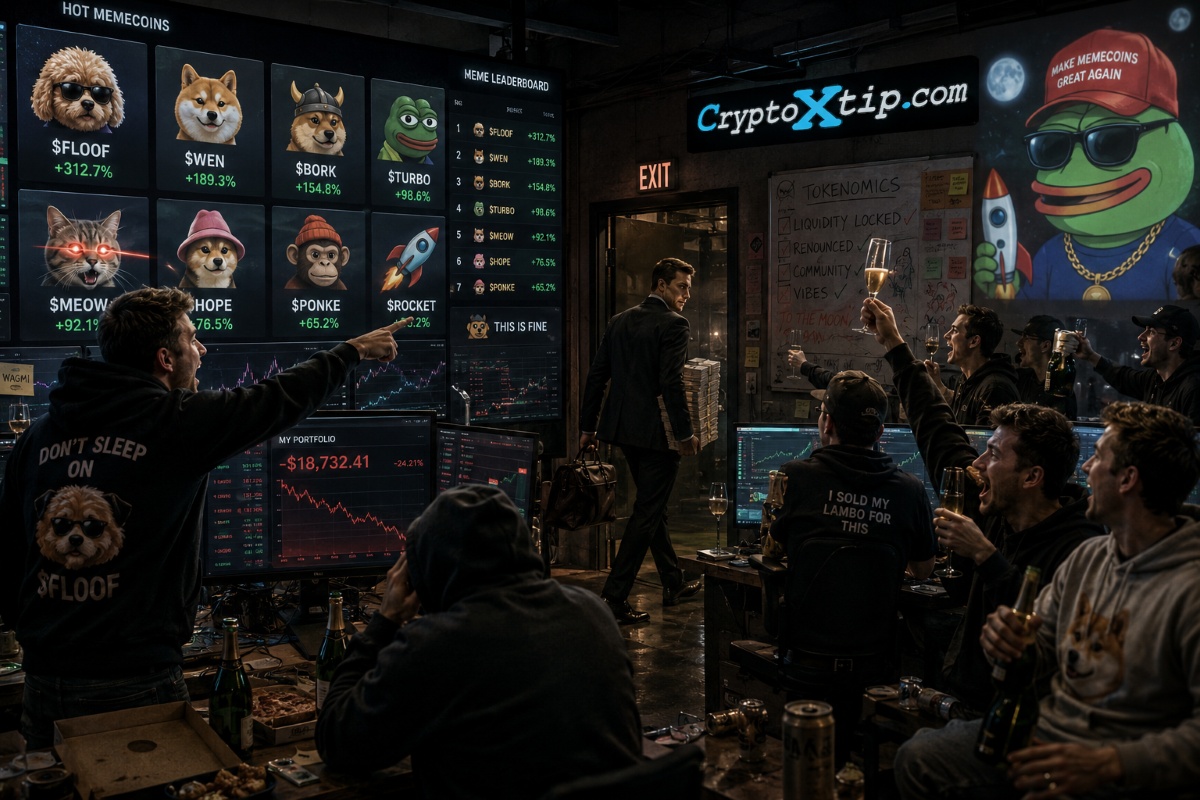
Memecoins continue attracting retail traders despite years of data showing most participants lose money, often while a small minority captures outsized gains.
The memecoin market has always sold a peculiar fantasy: the idea that somewhere inside a chaotic pile of dog logos, internet jokes and aggressively optimistic Telegram groups sits the next life-changing trade.
Occasionally, that fantasy becomes reality for a handful of traders. Screenshots of six-figure gains spread across social media within hours. Anonymous wallets turn small positions into fortunes. Influencers suddenly develop spiritual convictions about frog-themed assets created three days earlier.
The larger reality tends to be less cinematic.
Years of trading data, blockchain analysis and market research suggest that most retail traders participating in speculative memecoin cycles ultimately lose money. The interest remains enormous, but the signal-to-noise ratio across the sector has traditionally been somewhere between “difficult” and “heroically terrible.”
That has not stopped traders from trying.
In many ways, memecoins represent the purest form of modern speculative markets: fast narratives, low barriers to entry, social-media-driven momentum and liquidity conditions capable of turning excitement into catastrophe within a single afternoon.
A Market Built on Attention
Unlike Bitcoin or major smart contract networks, memecoins rarely depend on long-term utility narratives. Most derive value primarily from community momentum, internet virality and speculative demand.
That creates a market structure where attention itself becomes the product.
A token trends on X, Telegram or TikTok. Early buyers rush in. Liquidity spikes. Influencers amplify momentum. Retail traders arrive after seeing screenshots of overnight gains. Larger holders begin taking profits into rising demand. Then the cycle repeats elsewhere.
The mechanics are simple. The execution is brutal.
Several studies and industry reports over recent years have highlighted the uneven distribution of gains inside highly speculative crypto sectors. Research examining meme token trading patterns repeatedly found that early insiders, large holders and sophisticated automated traders captured disproportionate profits while late retail participants absorbed most of the downside.
A recent academic case study examining the TRUMP memecoin launch described a familiar dynamic: concentrated profits among early participants, sharp volatility and steep losses for many retail traders entering later in the cycle.
That pattern is hardly unique to one token.
Memecoin markets often operate with extreme asymmetry. The traders posting extraordinary returns online are usually not representative of the average participant. Survivorship bias does the rest. Social media platforms naturally promote the rare winner, not the thousands of traders quietly deleting wallets after a liquidity collapse.
The Structural Problem Retail Faces
Retail traders face several disadvantages in memecoin markets, many of them structural rather than emotional.
First, information moves unevenly.
Professional traders, on-chain analysts and highly connected insiders frequently identify emerging tokens long before broader retail awareness arrives. By the time a memecoin trends publicly, substantial positioning may already exist among early wallets.
Second, liquidity conditions can deteriorate extremely quickly.
Many meme tokens trade on decentralized exchanges with relatively thin liquidity pools. That environment amplifies volatility and creates favorable conditions for market manipulation, coordinated promotion campaigns and aggressive profit-taking by large holders.
Academic research on decentralized exchange behavior has repeatedly identified widespread wash trading and manipulative activity across token markets. One study found substantial evidence of wash trading among smaller digital assets traded on decentralized platforms.
Retail traders often enter these markets believing they are competing against other casual investors. In reality, they may be trading against bots, market makers, insiders and experienced speculators operating with significantly better execution speed and information access.
Crypto markets are famously open. They are not especially equal.
The rise of automated sniping bots further intensified the imbalance. Many newly launched memecoins now experience immediate algorithmic trading activity seconds after deployment, leaving slower retail participants buying after the earliest price expansion already occurred.
Why People Keep Trading Them Anyway
Despite the risks, retail interest in memecoins remains remarkably resilient.
Part of the reason is psychological.
Traditional financial markets rarely offer the possibility of turning a few hundred dollars into life-changing money within days. Memecoins occasionally appear to offer exactly that, even if the statistical odds remain deeply unfavorable.
The appeal also reflects broader market conditions.
In periods where Bitcoin and major altcoins trade sideways, speculative attention often migrates toward higher-volatility sectors. Traders chasing momentum naturally gravitate toward assets capable of producing extreme short-term moves.
Kaiko research on European crypto trading trends noted that retail traders continued participating heavily in memecoin speculation even as Bitcoin remained the dominant asset class.
There is also an important cultural component.
Memecoins transformed crypto speculation into participatory internet entertainment. Communities form rapidly around shared jokes, narratives and collective identity. Trading becomes partially financial and partially social performance.
That distinction matters because people rarely behave rationally inside environments designed around collective excitement.
A trader buying a memecoin is not always evaluating fundamentals. Sometimes they are purchasing belonging, entertainment or temporary optimism disguised as a ticker symbol.
Financial history contains many speculative bubbles. Few came with reaction GIFs and community mascots.
Scams, Rug Pulls and Manufactured Hype
The memecoin sector also remains heavily exposed to fraud and manipulation.
Blockchain intelligence firms and crypto security researchers have repeatedly documented the scale of scams associated with highly speculative token launches. According to a 2025 report referenced by CoinDesk, crypto investors lost more than $500 million to memecoin-related rug pulls and scams during 2024 alone.
Those losses reflect only the visible part of the market.
Many smaller rug pulls, fake liquidity schemes and manipulated launches never receive mainstream attention because the individual losses remain relatively small. Collectively, however, they form a significant part of the memecoin trading ecosystem.
Research into counterfeit cryptocurrencies and token scams has also identified thousands of fake or deceptive token projects targeting retail investors across blockchain networks.
The economics behind these schemes are straightforward. Launching a token requires relatively little capital. Social media promotion is cheap. Retail speculation provides liquidity. The incentives for abuse remain enormous.
This creates an environment where genuine community-driven projects coexist alongside outright predatory behavior, often with very little visible distinction during the early stages.
Retail traders frequently assume they can identify scams before collapse. Markets repeatedly demonstrate otherwise.
In speculative environments driven by momentum, warning signs often appear obvious only after liquidity disappears.
The Influence Economy Around Memecoins
Influencer culture also plays a central role in memecoin volatility.
Large social media accounts can dramatically impact trading activity simply by mentioning smaller tokens. Some promotions are organic. Others involve undisclosed compensation, insider positioning or coordinated marketing campaigns.
That dynamic creates conflicts of interest throughout the ecosystem.
Retail traders may interpret enthusiastic online commentary as conviction when it sometimes functions more like exit liquidity preparation. By the time public excitement reaches peak intensity, larger holders may already be reducing exposure quietly.
This is not unique to crypto, but memecoins accelerate the cycle significantly because information spreads instantly while liquidity remains comparatively fragile.
The market occasionally resembles a digital casino where everyone claims to be early while standing in the same crowded doorway.
Even experienced traders struggle in these conditions.
Fast-moving speculative markets reward timing, discipline and risk management. Retail participants often arrive with enthusiasm instead. Unfortunately, enthusiasm remains difficult to hedge.
Can Memecoins Mature?
Some traders argue the memecoin sector is evolving.
Supporters point to stronger community organization, improving on-chain transparency and broader integration with crypto infrastructure. Certain meme tokens developed substantial liquidity, exchange listings and recognizable online brands over time.
There is some truth to that argument.
The sector has matured operationally compared with earlier speculative cycles. Trading infrastructure improved. Wallet accessibility expanded. On-chain analytics became more sophisticated. Retail traders now possess better tools for evaluating token distribution and liquidity conditions than they did several years ago.
Still, the underlying economic structure remains highly speculative.
Most memecoins continue relying heavily on attention cycles rather than sustainable cash flows, protocol revenue or long-term utility. That does not make them inherently illegitimate, but it does make valuation unusually fragile.
As Crypto X Tip has noted in previous coverage of speculative token markets, liquidity and narrative momentum often matter more than fundamentals during peak retail phases. That reality can generate extraordinary rallies, but it also creates brutal reversals once attention shifts elsewhere.
And attention always shifts eventually.
What This Means
The memecoin market continues attracting retail traders because it offers something traditional finance rarely provides: the believable illusion that extraordinary wealth might still be available to ordinary participants.
Occasionally, that belief produces genuine winners.
More often, it produces a transfer of capital from late retail entrants toward early insiders, sophisticated traders and opportunistic promoters operating inside highly asymmetric markets.
The broader data around speculative crypto trading has remained relatively consistent for years. Most retail traders struggle to outperform in volatile, attention-driven environments dominated by momentum and information imbalance.
Memecoins simply compress those risks into faster cycles with louder communities and better memes.
That does not mean interest will disappear. Speculation is deeply tied to human behavior, especially during periods of economic uncertainty and online financial culture. As long as traders continue searching for asymmetric upside, memecoins will likely remain part of crypto markets.
But the sector’s long-term pattern remains difficult to ignore.
The market rewards a small minority spectacularly while quietly exhausting everyone else. Retail traders continue entering anyway, partly because the rare success stories remain visible and partly because modern speculation increasingly functions like entertainment wrapped inside financial infrastructure.
In crypto, people often say they are “here for the technology.” Memecoin markets occasionally reveal a less comfortable truth: many are here for the possibility that someone else became rich yesterday, and maybe tomorrow it could finally be them.
Related Articles
More stories you may want to explore.


Sponsored Placements











