
The Dip, the Bounce, and the Eternal “Is This It?”
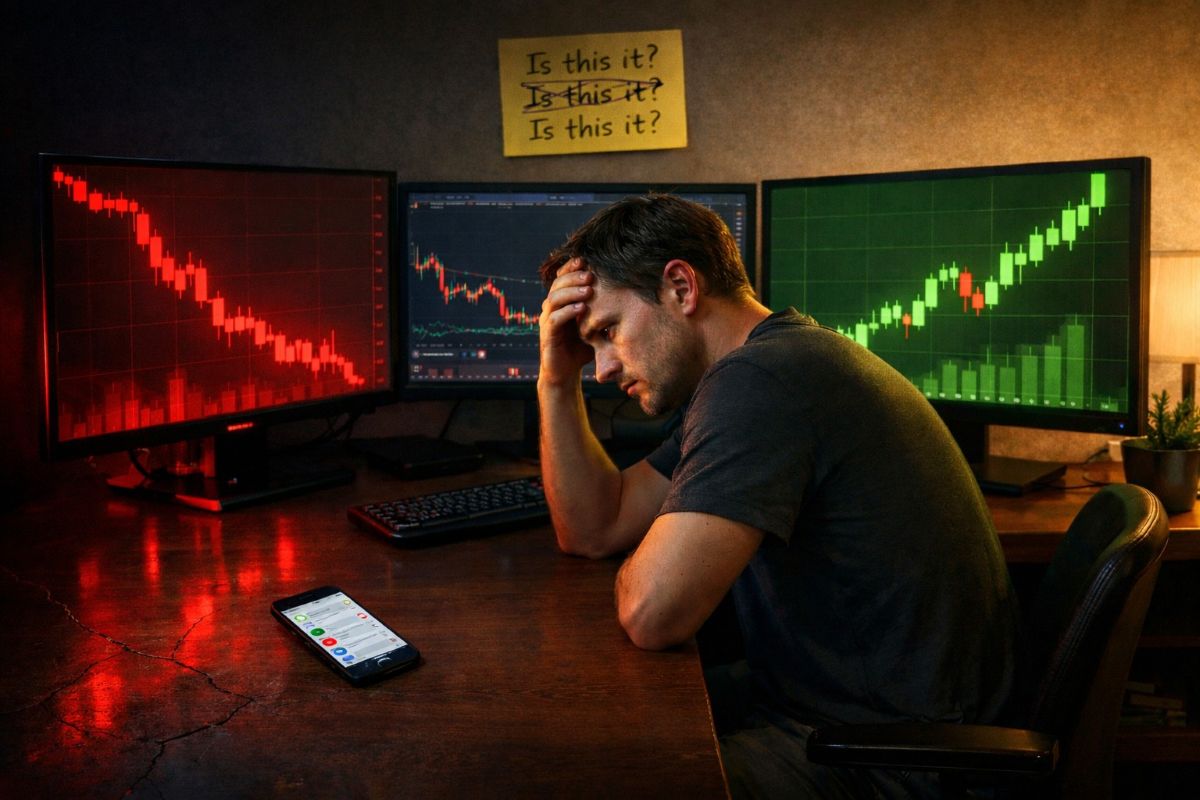
Fear, liquidity shifts, cautious buying, and traders arguing with their own charts again.
The crypto market recently performed its favorite magic trick: falling just enough to scare everyone, then bouncing just enough to confuse them. Prices dipped, timelines filled with dramatic predictions, and the phrase “I told you so” briefly became the most traded asset on social media. Now that we’re seeing a modest recovery, the mood has shifted from panic to cautious optimism—also known as “refreshing the chart every three minutes but pretending it’s long-term investing.”Why Did Prices Drop?
The recent decline wasn’t caused by a single villain twirling a mustache. It was a combination of familiar forces: profit-taking after previous gains, macro uncertainty, and liquidity rotating out of risk assets. When traditional markets sneeze, crypto still catches a cold—just with more memes.
Leverage also played its usual role. Too many traders borrowing too much money to chase too small a move creates a fragile structure. When prices move against them, liquidations cascade, charts turn red, and everyone suddenly becomes an expert in risk management after the fact.
Add to that a few regulatory headlines and the market’s natural tendency toward overreaction, and you have the perfect recipe for a correction. Nothing fundamentally broke—prices simply moved faster than sentiment could handle.
Why Is It Going Up Again?
The rebound we’re seeing now is less dramatic but more interesting. Long-term buyers tend to appear during fear, not euphoria. When prices drop into perceived value zones, accumulation begins quietly. There are no fireworks, no viral tweets—just steady buying that gradually stabilizes the market.
Institutional flows also tend to operate on a different emotional timeline. While retail panics, larger players evaluate allocations, liquidity conditions, and macro signals. Their entries don’t create instant moonshots, but they do create structural support.
Another factor is simple market mechanics: after heavy liquidations, the absence of forced sellers naturally allows price to recover. In crypto, sometimes the rally isn’t about new buyers—it’s about the sellers running out of energy.
Is This a Real Recovery or Just Hype?
This is the question that defines every crypto cycle. The honest answer is that markets rarely move in straight lines. A bounce after a drop is normal. Whether it becomes a sustained uptrend depends on liquidity, macro conditions, and whether participants keep buying after the initial relief rally.
Right now, the rebound looks more like stabilization than full-blown euphoria. Volumes are improving, sentiment is less fearful, but we’re not seeing the kind of explosive momentum that typically defines a new bull phase. In other words, the market is breathing—not sprinting.
That doesn’t mean another drop is impossible. Crypto markets are famous for retesting support levels just to make sure everyone remains emotionally unstable. Short-term volatility remains part of the system’s personality.
The Psychological Cycle
What we’re witnessing is the classic emotional loop: optimism, euphoria, correction, fear, relief, and cautious hope. Traders experience all six phases within a single week. Long-term investors zoom out and call it “noise,” which is technically correct but emotionally difficult.
The difference in the current cycle is maturity. Users are more aware of self-custody, risk management, and diversification. The industry itself has better infrastructure, more transparency, and fewer unsustainable yield schemes pretending to be permanent.
So What’s the Real Situation Today?
The market is in a transitional phase. Not collapsing, not exploding—rebuilding. Corrections have removed excessive leverage, prices have found temporary support, and buyers are cautiously returning. That doesn’t guarantee immediate upside, but it does suggest a healthier structure than during purely speculative spikes.
The key factor to watch is liquidity. Sustained growth requires consistent inflows, not just short squeezes and emotional rebounds. If liquidity increases, the current recovery could evolve into a stronger trend. If it fades, the market may revisit lower levels before deciding its next direction.
The Honest Conclusion
So why did the price fall? Because markets correct. Why is it rising again? Because value buyers exist and forced selling ended. Is it hype? Partially—crypto always contains a percentage of hype. Will it go lower? Possibly—volatility is not a bug, it’s a feature.
The real takeaway is that the market is behaving normally for a maturing but still speculative asset class. Sharp moves down, measured moves up, endless debate in between.
For traders, this is a game of timing and risk. For investors, it’s a test of patience. And for everyone else, it’s a reminder that crypto never moves in straight lines—only in dramatic plot twists.
In the meantime, the charts continue, the blocks keep confirming, and somewhere a trader is opening a position based entirely on a feeling and a moving average. As always.
Related Articles
More stories you may want to explore.



Sponsored Placements











