
Mt. Gox Bitcoin Move Revives an Old Market Fear
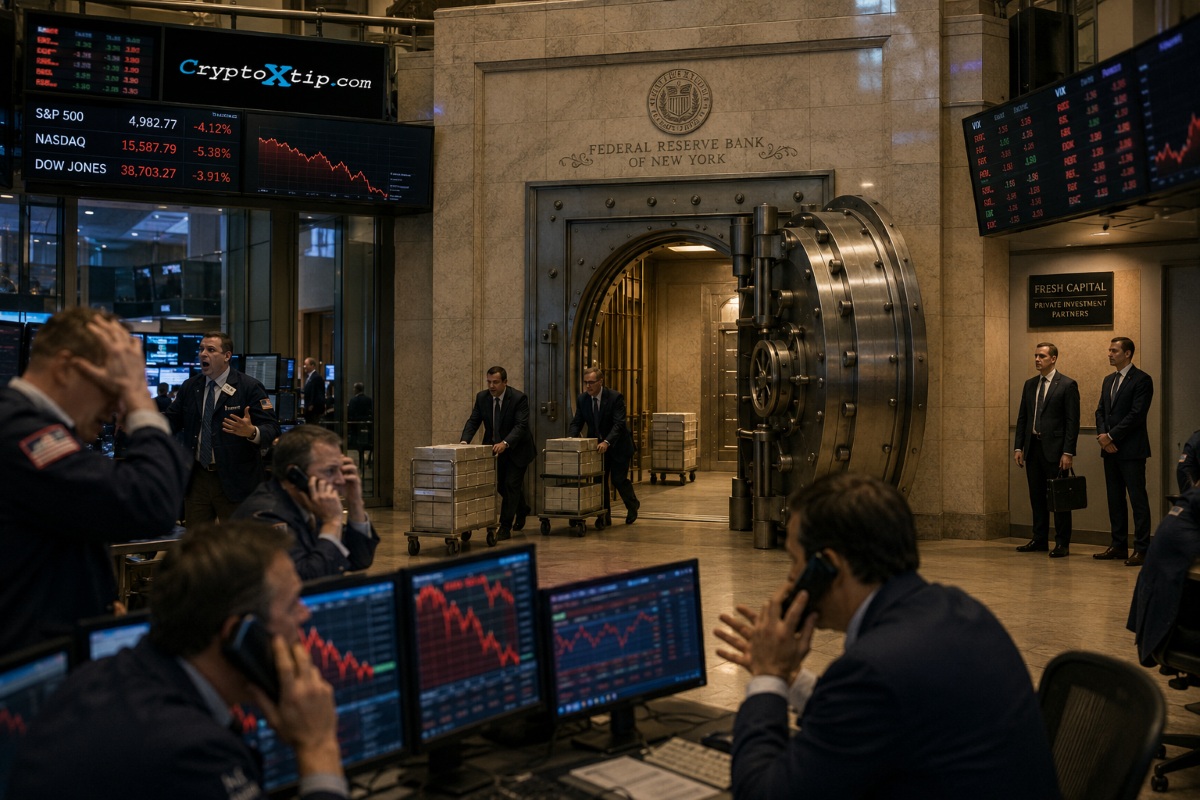
More than 10,000 BTC linked to Mt. Gox changed wallets, reviving concerns about selling pressure as analysts warn fresh capital remains scarce.
A transfer of more than 10,000 Bitcoin from wallets associated with the long-defunct Mt. Gox exchange has once again reminded the market that some of crypto’s oldest unresolved stories still have the power to move sentiment.
Blockchain observers recently identified the movement of approximately 10,422 BTC from Mt. Gox-linked addresses to newly created wallets. The transfer immediately attracted attention across trading desks and social media, not because it confirmed an imminent sale, but because Mt. Gox-related transactions have historically been viewed as potential sources of future supply entering the market.
The timing is notable. Bitcoin has spent much of 2026 navigating a market environment increasingly driven by capital flows rather than purely by supply-side narratives. Against that backdrop, even routine administrative wallet movements can quickly become catalysts for investor anxiety.
For many participants, the concern is straightforward: if creditors eventually receive and liquidate portions of their long-awaited Bitcoin holdings, additional selling pressure could emerge at a time when demand growth appears less robust than in previous cycles.
Yet the latest transfer does not provide evidence that such selling is underway. On-chain data indicates the coins were moved between wallets rather than sent directly to exchanges or known custodians. Similar movements have occurred before during the lengthy rehabilitation process surrounding Mt. Gox repayments.
Why Mt. Gox Still Matters
More than a decade after its collapse, Mt. Gox remains one of the most influential names in Bitcoin history. The Tokyo-based exchange once handled the majority of global Bitcoin trading volume before its spectacular failure in 2014.
The rehabilitation process has stretched across multiple years, creating a unique market overhang. Thousands of creditors are still entitled to Bitcoin distributions, and traders have repeatedly speculated about what recipients might do once those assets become fully accessible.
That uncertainty often creates a psychological effect larger than the actual transaction itself. Markets dislike unknowns, and Mt. Gox represents one of the largest remaining pools of Bitcoin associated with a legacy insolvency process.
According to recent reporting, the transfer involved approximately 10,422 BTC worth hundreds of millions of dollars. The movement was among the largest wallet transactions linked to Mt. Gox in recent months and arrived ahead of ongoing creditor repayment deadlines. Importantly, the coins have not been observed moving to exchange deposit addresses, reducing immediate concerns of a direct market sale.
Veteran Bitcoin investors may find the reaction familiar. Every major Mt. Gox transfer tends to generate headlines predicting a wave of selling. Reality has often proven more nuanced. Some creditors have waited over ten years for repayment and may choose to hold their assets rather than immediately sell them.
Others may liquidate portions of their holdings for diversification, tax planning, or simple life reasons. After all, waiting a decade for access to capital can make even the most committed Bitcoin believer reconsider concentration risk.
The Bigger Question Is Demand
While Mt. Gox captures headlines, analysts at Citi have pointed toward a different concern. In their view, the larger challenge facing Bitcoin is not necessarily the prospect of major holders selling. The more significant issue may be the lack of sufficient new capital entering the market to absorb available supply.
This perspective shifts the discussion away from individual wallet transfers and toward broader market structure.
Bitcoin's price has historically depended on a relatively simple equation. Sellers exist in every market. The key question is whether enough buyers are willing to absorb those sales without forcing prices lower.
Citi’s analysis suggests that investor focus may be misplaced when attention centers exclusively on whale activity or isolated liquidation events. A market can withstand substantial selling if demand remains strong. Conversely, even moderate selling pressure can have an outsized impact when fresh capital becomes scarce.
That distinction matters because recent crypto market conditions have shown signs of weaker capital formation compared with earlier phases of the cycle. Several market observers have noted softer investment flows across digital assets, reflecting broader macroeconomic uncertainty and a more selective approach from institutional investors.
The market's challenge, therefore, may not be the existence of supply. Bitcoin has always had sellers. The challenge is ensuring that demand growth continues at a pace capable of absorbing that supply.
Liquidity Is the Market's Oxygen
Liquidity often receives less attention than price action, but it frequently determines how markets respond to news events.
When liquidity is abundant, large transfers can be absorbed with relatively little disruption. When liquidity becomes thinner, identical transactions may trigger exaggerated reactions.
This dynamic helps explain why wallet movements attract such scrutiny. Traders are not merely analyzing the transfer itself. They are evaluating what that transfer might mean in a market where capital inflows have become increasingly important.
Bitcoin's maturation has also changed the conversation. Previous cycles were heavily influenced by retail speculation and mining-related supply dynamics. Today's market is increasingly shaped by institutional allocation decisions, ETF flows, treasury strategies, and macroeconomic conditions.
As a result, demand shocks can often matter more than supply shocks.
A useful way to think about the current environment is to imagine a stadium with multiple exits. The concern is not that a few people decide to leave. The concern arises when fewer people are entering through the gates at the same time.
That appears to be the essence of Citi's warning. Bitcoin's resilience depends less on preventing sales and more on maintaining a steady pipeline of new participants willing to commit capital.
Investor Sentiment Remains Fragile
The market's reaction to the Mt. Gox transfer also reveals something important about current investor psychology.
Bull markets tend to dismiss potentially bearish developments. Bearish or uncertain environments tend to amplify them.
The fact that a wallet transfer can still trigger widespread discussion suggests investors remain highly sensitive to supply-related risks. That sensitivity is understandable. Bitcoin's history contains numerous episodes where unexpected selling pressure contributed to sharp volatility.
Critics of the bearish interpretation argue that the market may be overestimating the threat. Not every transferred Bitcoin is destined for an exchange order book. Creditors are a diverse group with different investment horizons and financial objectives.
Some recipients may view Bitcoin as a long-term asset. Others may gradually reduce exposure rather than execute large immediate sales. The eventual outcome is unlikely to be as simple as a single wave of liquidation.
At the same time, dismissing the issue entirely would be equally simplistic. The market must account for the possibility that at least some portion of distributed Bitcoin eventually reaches the market.
That balance between uncertainty and probability continues to shape trader behavior.
Readers following additional ecosystem coverage can find broader industry developments through Article Partners where market structure and liquidity trends remain recurring themes across digital asset markets.
What This Means
The transfer of more than 10,000 BTC from Mt. Gox-linked wallets has revived familiar concerns about future selling pressure, but the transaction itself does not confirm that any sale is imminent.
More importantly, the episode highlights a deeper issue increasingly discussed by institutional analysts: Bitcoin's ability to attract fresh capital. Markets can absorb large sellers when demand is strong. They struggle when new buyers become scarce.
For traders and investors, the key metric may not be the movement of old coins alone. It may be whether enough new money arrives to meet them on the other side of the trade.
In that sense, Mt. Gox remains a headline. Liquidity remains the story.
Related Articles
More stories you may want to explore.



Sponsored Placements











