
Crypto Markets Trade on Macro, Not Hype
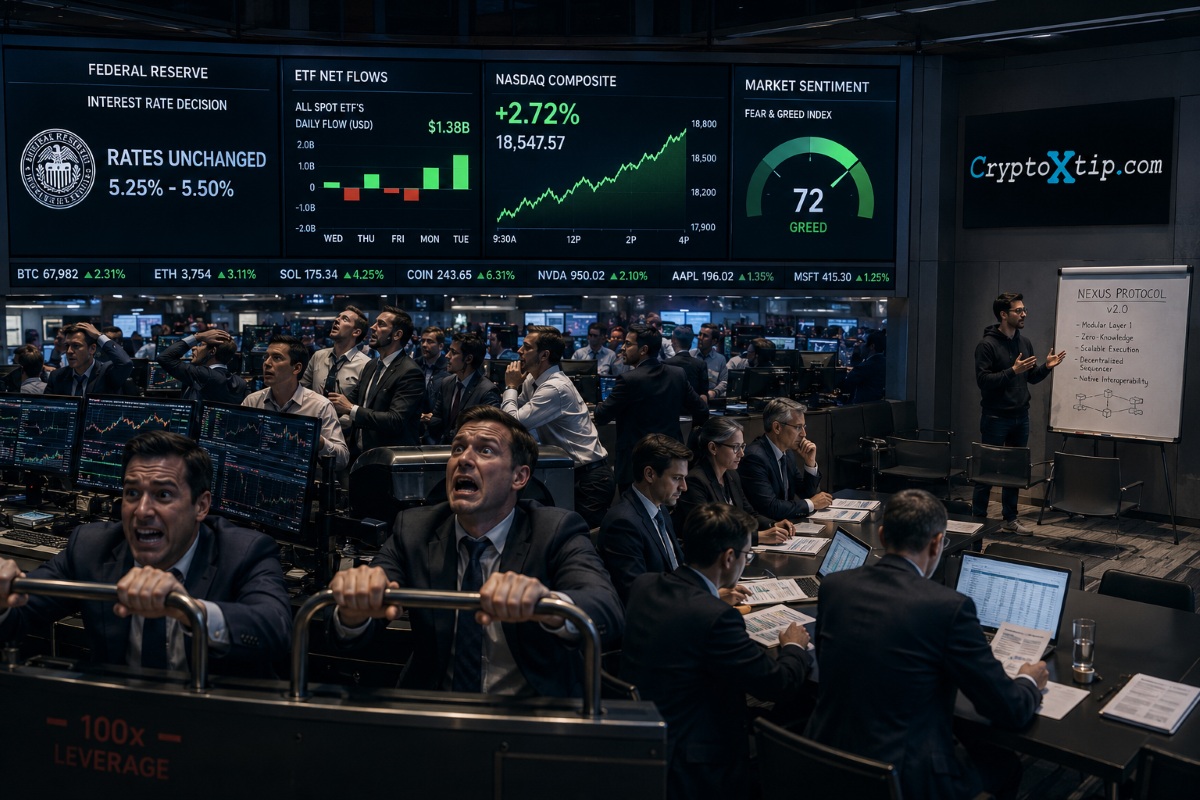
Crypto markets remain tied to macroeconomic trends, ETF flows and institutional positioning, while leveraged trading continues to amplify volatility across Bitcoin and Ethereum.
For much of crypto’s history, investors searched for the next technological breakthrough to explain market movements. A new blockchain launch, a major protocol upgrade or an emerging use case could dominate headlines and shape sentiment for weeks.
The current environment looks different. Over the past several days, market direction has been driven less by technology and more by the same forces influencing traditional financial markets: macroeconomic expectations, institutional capital flows, regulation and geopolitical uncertainty.
Bitcoin and Ethereum remain the center of attention, but the discussion increasingly revolves around exchange-traded fund activity, monetary policy expectations and risk appetite rather than software releases. The industry has spent years arguing that digital assets represent an alternative financial system. Ironically, as institutional adoption expands, crypto often behaves more like a component of the existing one.
Recent market reporting highlights a recurring theme. Investors continue to monitor ETF inflows and outflows closely, while broader concerns surrounding inflation, interest rates and global political tensions remain significant drivers of sentiment. In many cases, the market appears more sensitive to developments in Washington, Wall Street and central banks than to announcements from blockchain developers.
Nasdaq Still Sets the Tone
One of the most important realities facing crypto investors today is the continued relationship between digital assets and technology equities.
Although Bitcoin is frequently described as an independent asset class, institutional participation has strengthened its connection to broader financial markets. Large investment firms increasingly evaluate crypto alongside growth stocks, venture capital allocations and other risk-oriented assets. When investors become comfortable taking risk, crypto often benefits. When caution returns, digital assets frequently find themselves under pressure alongside technology shares.
The Nasdaq remains a particularly important reference point. Artificial intelligence companies, semiconductor firms and other high-growth technology names continue to attract substantial investor attention. In recent weeks, some analysts have observed capital rotating toward technology opportunities with clearer earnings narratives and stronger institutional sponsorship, reducing speculative demand across portions of the crypto market.
This does not mean Bitcoin has lost its unique characteristics. The asset still operates within a distinct ecosystem and maintains long-term investment narratives centered around scarcity, decentralization and global accessibility. Yet short-term trading behavior increasingly reflects broader market conditions rather than purely crypto-native developments.
For traders hoping that digital assets would completely decouple from traditional finance, the evidence remains mixed. Institutional adoption has delivered legitimacy and liquidity, but it has also brought greater exposure to the same macro forces influencing conventional portfolios.
ETF Flows Have Become a Market Signal
Few indicators now receive as much attention as ETF flows.
Since the arrival of regulated crypto investment products, inflow and outflow data have become daily sentiment gauges for market participants. Investors view these figures as a window into institutional demand, helping them assess whether professional capital is entering or leaving the sector.
Recent reporting from financial and crypto market analysts has highlighted periods of significant ETF outflows, creating additional pressure on market sentiment. While long-term adoption trends remain intact, the short-term impact of institutional repositioning has become increasingly visible across digital asset markets.
This shift represents a major change from earlier crypto cycles. Retail investors once dominated trading activity, and market narratives frequently emerged from online communities. Today, institutional capital plays a far larger role. As a result, portfolio reallocations by asset managers can influence market direction as much as developments within the blockchain industry itself.
The growing importance of ETF flows also reflects crypto’s broader maturation. Institutional investors often move capital according to risk models, economic forecasts and portfolio requirements rather than community enthusiasm. Their participation introduces stability over longer periods but can create abrupt adjustments when market conditions change.
Leverage Remains a Volatility Engine
If ETF flows explain part of the market’s direction, derivatives markets often explain its speed.
Recent liquidation data suggest that leverage remains deeply embedded across crypto trading activity. Many market participants continue to use borrowed capital to amplify potential gains, a strategy that can produce impressive returns when trends move in the expected direction.
The problem is that leverage rarely remains a friend during periods of uncertainty.
When prices begin moving sharply, liquidation cascades can accelerate momentum in both directions. Long positions may be forced to close during selloffs, pushing prices lower. Short positions can experience similar pressure during rapid rallies. The result is a market structure where volatility feeds on itself.
Several recent trading sessions have demonstrated this dynamic clearly. Large liquidation events across derivatives platforms have contributed to sudden price swings in both Bitcoin and Ethereum. In some cases, market moves that began with macroeconomic headlines quickly intensified as leveraged positions were automatically closed.
The phenomenon is hardly new, but it remains one of crypto’s defining characteristics. Traditional markets certainly experience leverage-driven volatility, yet digital assets often compress those reactions into far shorter timeframes.
For experienced traders, liquidations create opportunities. For less disciplined participants, they often serve as expensive reminders that volatility can work both ways.
Regulation and Transparency Continue to Matter
Beyond price action, regulation remains a dominant institutional theme.
Recent industry initiatives focused on improving token disclosures and transparency have attracted support from major exchanges and infrastructure providers. These efforts reflect a growing recognition that long-term institutional participation depends on information quality as much as technological innovation.
Large investors generally prefer environments where risks are measurable and disclosures are consistent. Greater transparency may not generate dramatic headlines, but it can reduce uncertainty and improve confidence among professional allocators.
The regulatory conversation extends beyond disclosures. Policymakers in multiple jurisdictions continue evaluating how digital assets should fit within existing financial frameworks. Every new proposal, enforcement action or regulatory clarification has the potential to influence market sentiment.
Investors increasingly understand that regulation is not simply an external risk factor. It has become part of the investment thesis itself. Clearer rules can encourage participation, while uncertainty can delay capital deployment.
As Crypto X Tip has noted in previous market coverage, some of the most consequential developments in crypto no longer involve code releases or token launches. They involve infrastructure, compliance and institutional accessibility.
Geopolitics Adds Another Layer of Uncertainty
Global political developments continue to shape investor behavior across financial markets, including crypto.
Periods of geopolitical tension often create conflicting pressures. Some investors view Bitcoin as an alternative asset capable of providing diversification during uncertain times. Others treat it as a risk asset and reduce exposure when volatility rises.
The result can be inconsistent short-term reactions. Market participants frequently debate whether Bitcoin should behave like digital gold or a high-growth technology investment. In practice, its behavior often depends on which group of investors dominates trading activity at a given moment.
This ambiguity contributes to the market’s complexity. Bitcoin can attract safe-haven narratives during one period and risk-off selling during another. Both interpretations can appear correct depending on the broader macro environment.
For institutional investors, geopolitical uncertainty reinforces the importance of liquidity management and risk controls. These considerations increasingly shape portfolio decisions across both traditional and digital asset markets.
What This Means
The crypto market currently appears more influenced by macroeconomic conditions, ETF flows, regulatory developments and institutional positioning than by new technological breakthroughs. Strong correlations with technology equities, particularly the Nasdaq, continue to shape sentiment, while heavy leverage across derivatives markets amplifies every major move. For investors, the message is increasingly clear: understanding crypto now requires paying attention not only to blockchain innovation but also to the broader financial forces driving global markets.
Related Articles
More stories you may want to explore.



Sponsored Placements











