Crypto Market Finds Its Footing, But Conviction Remains Elusive
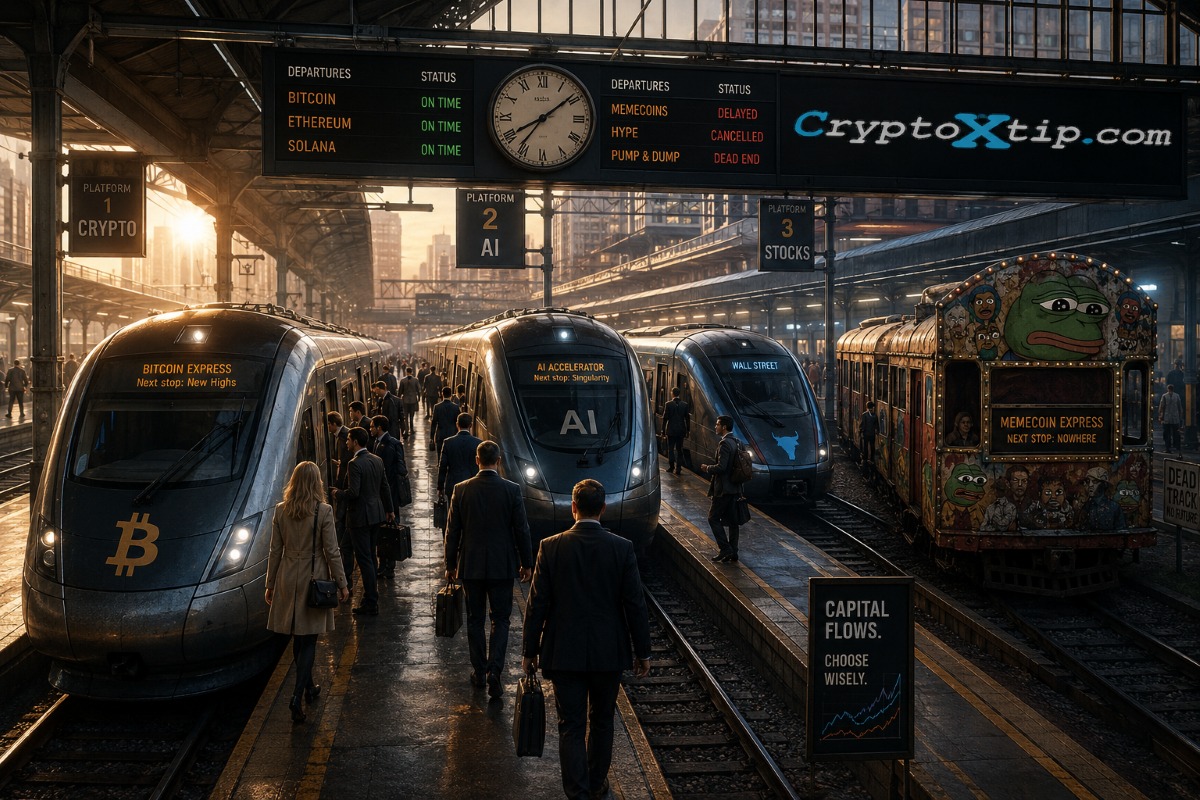
Crypto markets are stabilizing as institutional adoption grows, but traders still await a stronger catalyst for the next major trend.
After several months defined by volatility, sharp corrections, and shifting narratives, the cryptocurrency market is showing signs of stabilization. Bitcoin, Ethereum, and Solana have all posted gains in recent sessions, helping improve sentiment across the broader digital asset sector.
The mood, however, is far from euphoric. Investors appear cautiously optimistic rather than aggressively bullish. Market participants are increasingly willing to deploy capital, but many remain reluctant to make large directional bets until stronger confirmation emerges from macroeconomic conditions, institutional flows, or regulatory developments.
That distinction matters. Crypto has often moved between extremes of fear and enthusiasm. The current environment feels different. Instead of chasing every rally, traders are asking a more difficult question: what exactly is supposed to drive the next major phase of growth?
For now, the market appears to be rebuilding confidence after a period of weakness rather than launching into a new speculative frenzy. In crypto, that may sound less exciting, but healthy recoveries rarely arrive with fireworks.
A Market Searching for Direction
Recent price action has reflected a broader stabilization across digital assets. Bitcoin has remained relatively resilient while Ethereum and Solana have also attracted renewed interest from traders seeking exposure beyond the market leader. Analysts broadly describe sentiment as cautiously constructive, though conviction remains limited. Market participants continue to monitor ETF activity, institutional demand, and signals from central banks before committing to longer-term positions.
The market's hesitation is understandable. Investors have spent the last several years navigating a landscape shaped by inflation concerns, changing monetary policy, regulatory uncertainty, and periodic liquidity shocks. Those experiences have created a more disciplined trading environment than the one that fueled previous speculative cycles.
Instead of chasing momentum blindly, many investors are evaluating opportunities through a broader macroeconomic lens. This has increased sensitivity to economic data releases, Federal Reserve commentary, and developments across traditional financial markets.
As a result, crypto increasingly behaves like part of a larger risk-asset ecosystem rather than a completely isolated market.
Capital Is Rotating, Not Disappearing
One of the most important themes shaping the market today is capital rotation.
Rather than exiting risk assets entirely, investors are frequently shifting allocations between cryptocurrencies, technology stocks, artificial intelligence-related companies, and other growth-oriented sectors. This movement creates periods of heightened volatility as money rapidly flows toward whichever narrative appears most attractive at a given moment.
Recent weakness in AI-related equities has demonstrated how interconnected these sectors have become. Market analysts increasingly note that digital assets often move alongside broader technology-focused investments as investors reassess risk exposure across their portfolios.
The relationship works in both directions. Strong performance in technology stocks can improve sentiment toward crypto assets, while weakness in growth sectors can trigger broader risk reduction across markets.
This dynamic has made crypto more responsive to macroeconomic headlines than many enthusiasts once expected. The vision of a completely independent financial system has not disappeared, but investors continue to treat cryptocurrencies as part of a larger investment landscape.
In practical terms, that means inflation reports, employment data, interest rate expectations, and liquidity conditions remain highly relevant for digital asset markets.
Institutional Adoption Continues to Expand
Despite periodic market pullbacks, institutional involvement remains one of the strongest long-term pillars supporting the crypto sector.
Large financial firms continue to develop digital asset products, while exchange-traded funds have expanded access for both retail and professional investors. Several industry reports indicate that institutional participation remains a key driver of market stability, even as short-term demand fluctuates. Broader blockchain adoption across finance and tokenization initiatives also continues to advance.
This gradual integration into traditional finance has altered the structure of the market. Previous cycles were largely dominated by retail speculation. Today's environment includes pension funds, asset managers, hedge funds, family offices, and corporations evaluating digital assets through more traditional investment frameworks.
That shift brings advantages and limitations.
Institutional participation generally improves liquidity and market maturity. It can also reduce some of the extreme volatility that characterized earlier crypto cycles.
At the same time, institutions tend to move more slowly than retail traders. Their involvement often creates steadier trends but fewer explosive rallies.
For investors hoping to see overnight gains across every token category, that reality can occasionally feel disappointing. For market stability, it may ultimately prove beneficial.
Bitcoin Remains the Center of Gravity
Although alternative cryptocurrencies continue to attract attention, Bitcoin remains the primary reference point for the broader market.
When investors become uncertain, capital often gravitates back toward Bitcoin. Its liquidity, institutional recognition, and growing role as a digital store-of-value asset continue to distinguish it from much of the crypto landscape.
Several recent market reports suggest that long-term adoption trends remain intact even as short-term demand experiences fluctuations. Market participants continue to view Bitcoin as the asset most likely to benefit from ongoing institutional adoption and broader acceptance within traditional finance.
That does not mean Bitcoin is immune to volatility. It remains a risk asset and continues to react to changes in macroeconomic sentiment.
Yet compared with previous market cycles, Bitcoin increasingly resembles a mature asset class navigating periods of consolidation rather than a purely speculative instrument.
The Cooling of the Memecoin Era
Perhaps the clearest change in market behavior is the decline of memecoin-driven speculation.
During the peak of the memecoin boom, platforms such as Pump.fun generated enormous activity as traders rushed to create and trade new tokens. The environment rewarded speed, attention, and social media momentum.
That enthusiasm has cooled considerably.
While established memecoins continue to maintain active communities, the broader speculative frenzy has faded. Trading volumes have become more selective, investor attention has shifted toward larger assets, and many traders have become more cautious after experiencing the risks associated with highly speculative tokens.
This cooling trend may actually reflect a healthier market structure. Excessive speculation can generate short-term excitement, but it rarely creates lasting value. The decline in memecoin dominance suggests that investors are becoming more selective about where they allocate capital.
As noted in recent Crypto X Tip coverage of curated crypto projects, market participants increasingly appear focused on sustainability, liquidity, and adoption rather than purely viral narratives.
Regulation and Macro Still Matter
Regulatory developments continue to shape market expectations globally.
In Europe, the implementation of MiCA has provided a clearer framework for many crypto businesses, while discussions around digital asset regulation continue in other major jurisdictions. Greater clarity is generally viewed as positive for institutional participation, even if compliance requirements create additional challenges for some market participants.
Macroeconomic conditions remain equally important.
Many traders are watching interest rate expectations and central bank policy for clues about future liquidity conditions. Historically, crypto has performed best when investors feel comfortable allocating capital toward higher-risk opportunities.
That relationship has become increasingly evident as digital assets mature and integrate with traditional financial markets.
What This Means
The cryptocurrency market appears to be entering a phase of cautious stabilization following earlier declines. Bitcoin, Ethereum, and Solana have regained momentum, institutional adoption continues to expand, and long-term market structures remain intact.
Yet traders are still waiting for a stronger catalyst before declaring the beginning of a sustained trend. Capital continues rotating between crypto, technology stocks, and artificial intelligence-related investments, making markets more sensitive to macroeconomic developments and shifts in investor sentiment.
The memecoin frenzy that dominated previous periods has cooled significantly, reducing some of the excess speculation that characterized the market at its most exuberant moments.
For investors, the current environment presents a familiar challenge: balancing optimism about long-term adoption with caution about short-term uncertainty. The market has found its footing, but it has not yet decided where it wants to go next.
Related Articles
More stories you may want to explore.



Sponsored Placements