
Crypto Exchanges Shake Up Market With New Features, Fees, and FOMO
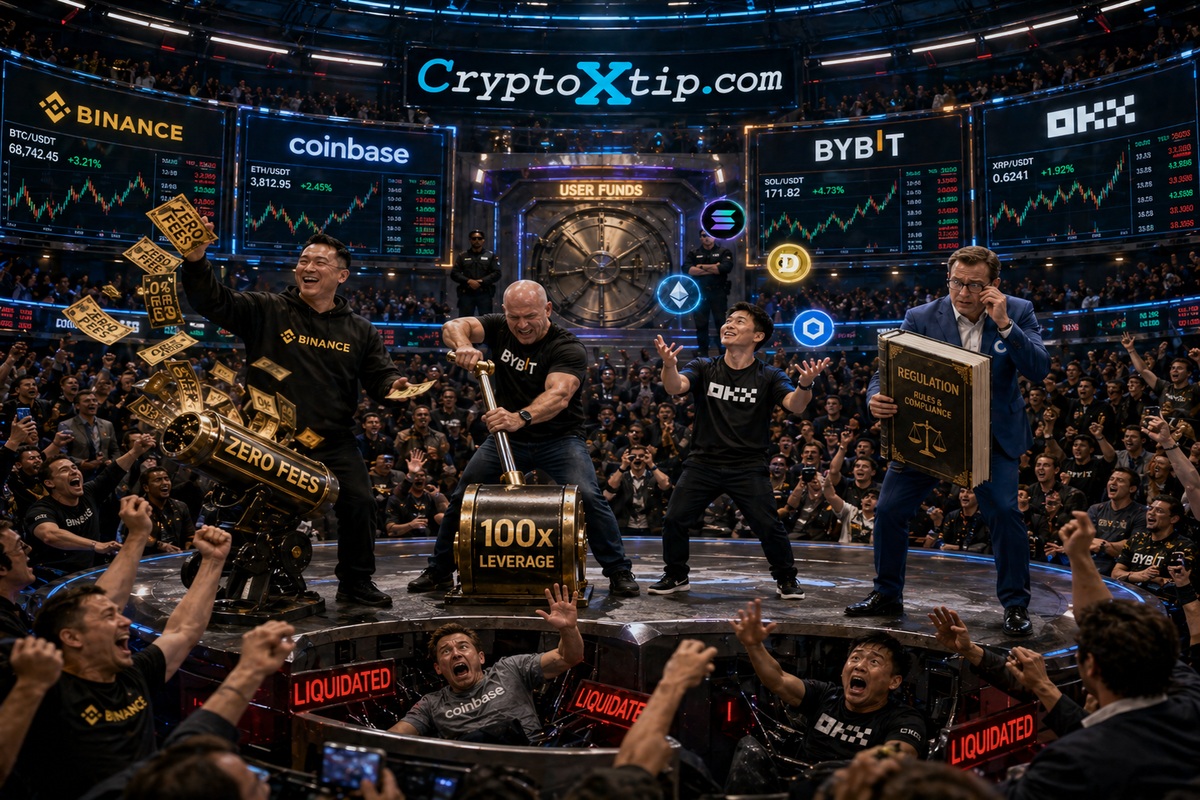
Exchanges evolve rapidly as competition intensifies, fees shift, and users demand more.
Exchanges Enter a New Phase: Less Fees, More Features, Same Chaos.
The world of crypto exchanges is once again in motion—and not the calm, orderly kind. Think less “Swiss watch” and more “rollercoaster designed by developers after three energy drinks.” Across major platforms, competition is heating up as exchanges race to attract users with lower fees, new products, and just enough innovation to keep regulators mildly concerned.
From giants like and to fast-moving challengers such as and , the exchange landscape is evolving into a full-blown arms race. And as always, the real winners are… well, it depends on the week.
Fee Wars: Because Nobody Likes Paying for Trades
If there’s one universal truth in crypto, it’s that traders hate fees almost as much as they hate missing a pump. Exchanges know this, and they’re responding accordingly. Recent months have seen a renewed push toward zero-fee trading campaigns, discounted maker fees, and creative reward systems designed to keep users glued to their dashboards.
But let’s be honest—“zero fees” in crypto often comes with an asterisk the size of a small country. Whether it’s wider spreads or hidden costs elsewhere, exchanges still need to make money. It’s just that now they’re doing it in ways that feel slightly less obvious… or at least more creatively disguised.
Derivatives Dominate: Leverage Is Still the Star of the Show
Spot trading may be the gateway, but derivatives remain the main attraction. Platforms like Bybit and Binance continue to expand their futures and options offerings, catering to traders who believe that 1x leverage is simply not exciting enough.
The appetite for leverage shows no signs of slowing down, even as markets remain volatile. Because if there’s one thing crypto traders consistently prove, it’s that risk is not something to be avoided—it’s something to be optimized, amplified, and occasionally regretted.
Of course, with great leverage comes great liquidation risk. And exchanges, ever the gracious hosts, are more than happy to provide both the opportunity and the consequences.
New Listings: The Never-Ending Hunt for the Next Big Thing
Token listings remain one of the most powerful tools in an exchange’s arsenal. A single listing on a major platform can send a token soaring—or at least give it a brief moment of fame before reality sets in.
Exchanges are increasingly selective about which projects they list, emphasizing compliance, liquidity, and user demand. At the same time, they’re under pressure to keep up with competitors who are quick to onboard trending assets.
This creates a delicate balance: list too cautiously, and you miss the hype; list too aggressively, and you risk hosting the next cautionary tale. It’s a bit like running a nightclub where every guest insists they’re famous.
Regulation Tightens: The Plot Twist Nobody Can Ignore
While exchanges compete for users, regulators are quietly (and sometimes loudly) reshaping the rules of the game. In regions like the United States and Europe, compliance requirements are becoming more stringent, pushing exchanges to adapt their operations.
For platforms like Coinbase, regulation is both a challenge and a selling point. Being compliant can attract institutional users, but it also comes with limitations that offshore competitors may not face.
Meanwhile, global players like Binance continue to navigate a complex web of jurisdictions, proving that running a crypto exchange in 2026 is part business, part diplomacy, and part extreme sport.
UX and Apps: Trading Gets a Makeover
Beyond fees and listings, exchanges are investing heavily in user experience. Mobile apps are becoming more intuitive, dashboards more customizable, and onboarding processes smoother than ever.
Because in a world where users can switch platforms with a few taps, convenience is king. Or at least co-king alongside low fees and high leverage.
Some platforms are even gamifying the trading experience, adding rewards, leaderboards, and social features. It’s trading—but with just enough dopamine to make you forget you’re staring at candlestick charts at 2 a.m.
Security and Trust: Still the Ultimate Currency
Despite all the innovation, one factor remains unchanged: trust is everything. Security breaches, withdrawal issues, and transparency concerns can quickly erode user confidence.
Exchanges are responding with improved security measures, proof-of-reserves initiatives, and clearer communication. Because nothing ruins a bullish mood faster than not being able to access your funds.
In many ways, the exchange business is a constant balancing act between innovation and reliability. Move too fast, and things break. Move too slow, and users leave.
The Bigger Picture: Exchanges as Crypto Gatekeepers
As the market evolves, exchanges are becoming more than just trading platforms. They’re gateways to the entire crypto ecosystem, offering staking, lending, payments, and even educational content.
This expansion reflects a broader trend: exchanges want to be the everything app of crypto. Whether that vision becomes reality remains to be seen, but one thing is clear—they’re not aiming small.
And for users, this means more options, more complexity, and, inevitably, more decisions. Because choosing an exchange in 2026 is no longer just about fees—it’s about features, trust, and how many tabs you’re willing to keep open.
Conclusion: Same Game, Higher Stakes
The exchange landscape is evolving at a rapid pace, driven by competition, regulation, and user demand. New features are rolling out, fees are shifting, and the battle for market share is as intense as ever.
Yet beneath all the changes, the core dynamic remains the same: exchanges thrive on activity, volatility, and user engagement. In other words, they do best when the market is anything but boring.
So whether you’re a casual trader or a full-time chart enthusiast, one thing is certain—the exchange wars are far from over. And if history is any guide, they’re only going to get more interesting… and slightly more chaotic.
Related Articles
More stories you may want to explore.


Sponsored Placements











