Kraken Pushes Tokenized Stocks Into the Mainstream
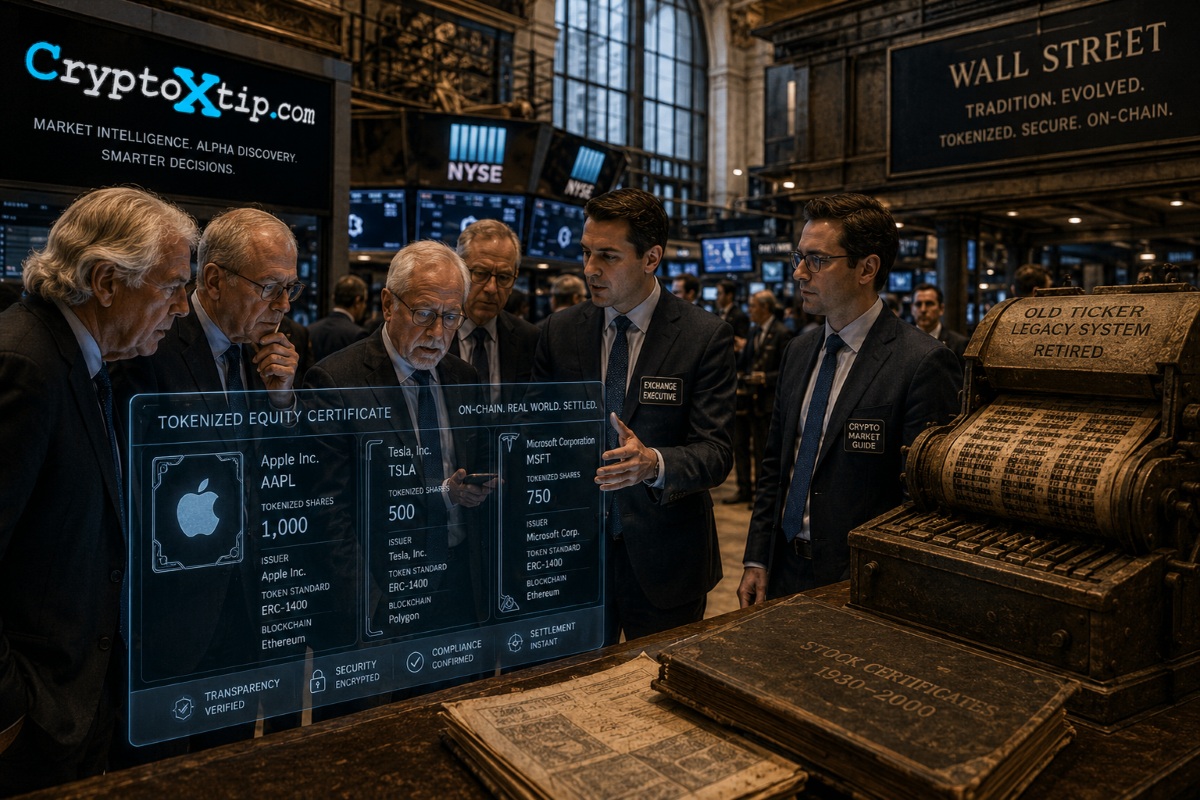
Kraken’s tokenized IPO ambitions reflect a broader shift as crypto exchanges and Wall Street increasingly converge around blockchain-based finance.
The cryptocurrency industry has spent much of the past decade attempting to connect two financial worlds that often viewed each other with skepticism. Traditional finance questioned the practical value of blockchain technology, while crypto advocates criticized the inefficiencies of legacy financial systems.
Today, those distinctions are becoming increasingly difficult to maintain.
Major exchanges, banks, asset managers, and financial technology firms are exploring ways to integrate blockchain infrastructure into mainstream financial products. Rather than replacing traditional markets, the emerging trend involves rebuilding portions of those markets using digital rails.
Kraken's recent announcement regarding tokenized IPO shares represents one of the clearest examples of this evolution. The initiative aims to bring traditionally restricted investment opportunities closer to retail investors through blockchain-based infrastructure, potentially expanding access while increasing market efficiency.
The development arrives at a time when Wall Street's relationship with crypto is undergoing a significant transformation. Bitcoin and Ethereum are no longer treated solely as speculative assets. Increasingly, they are being incorporated into the products, services, and strategic planning of major financial institutions.
Tokenized Stocks Move Beyond Theory
Tokenization has become one of the most frequently discussed concepts in modern finance. At its core, the process involves creating blockchain-based representations of traditional assets, allowing them to be traded, transferred, and managed through digital infrastructure.
While tokenized treasury products, money market funds, and private credit instruments have gained traction in institutional circles, publicly traded equities represent a particularly significant opportunity.
Kraken's effort to offer tokenized IPO shares highlights the growing ambition within the sector. Initial public offerings have historically been difficult for many retail investors to access at favorable terms. Allocations often flow first toward institutional participants, preferred clients, and large investment firms.
Blockchain advocates argue that tokenization could help create more flexible access mechanisms while enabling faster settlement and improved transparency.
The appeal extends beyond accessibility. Traditional stock settlement systems still rely on multiple intermediaries, complex reconciliation processes, and operating schedules tied to market hours. Blockchain infrastructure offers the possibility of near-instant settlement and more streamlined ownership tracking.
For crypto exchanges seeking new growth opportunities, tokenized equities represent a natural expansion. Rather than limiting their platforms to digital assets, exchanges increasingly envision themselves as gateways to a broader universe of tokenized financial products.
The strategy reflects an important shift in industry thinking. Crypto companies are no longer simply trying to attract users away from traditional finance. Many are now attempting to build bridges between the two systems.
The Convergence of Wall Street and Crypto
The broader context surrounding Kraken's initiative may be even more important than the product itself.
Over the past several years, traditional financial institutions have steadily increased their engagement with digital assets. What once appeared to be cautious experimentation has evolved into a more structured effort to integrate blockchain technology into existing financial operations.
Bitcoin exchange-traded funds helped accelerate this process by providing a familiar framework through which institutions could gain exposure to digital assets. Ethereum-related investment products have further expanded participation among professional investors.
At the same time, major banks and asset managers have explored tokenization projects, blockchain-based settlement systems, and digital asset custody services. These initiatives suggest that blockchain technology is increasingly being viewed as infrastructure rather than a standalone investment category.
This distinction matters.
The industry's early years were dominated by debates about whether cryptocurrencies would disrupt traditional finance. The conversation now focuses more on how traditional finance can incorporate blockchain efficiencies without abandoning existing regulatory structures.
In many ways, Wall Street has shifted from resisting crypto to selectively adopting the aspects it finds useful.
That process may be less dramatic than the revolutionary visions often promoted during earlier crypto cycles, but it could ultimately have a far greater long-term impact.
Bitcoin and Ethereum Gain Institutional Permanence
The growing acceptance of tokenized financial products is closely linked to the institutional maturation of Bitcoin and Ethereum.
These two assets have increasingly become the foundation upon which broader digital asset strategies are built. Financial institutions that once avoided cryptocurrency exposure altogether now frequently evaluate Bitcoin and Ethereum as part of their digital asset offerings.
For many organizations, the initial objective was simple: provide clients with access to growing demand. Over time, however, digital assets have become integrated into broader discussions about custody, settlement, tokenization, and infrastructure modernization.
Bitcoin's role as a widely recognized digital asset and Ethereum's position as a leading smart contract platform have made both networks important reference points for institutional blockchain strategies.
The significance extends beyond investment products.
As institutions become comfortable interacting with digital assets, they often become more receptive to exploring adjacent technologies such as tokenized securities, stablecoins, and decentralized settlement systems.
This creates a reinforcing cycle. Greater institutional familiarity encourages experimentation, while successful experimentation increases confidence in blockchain-based financial infrastructure.
The Opportunities and Challenges Ahead
Despite growing enthusiasm, tokenized equities and blockchain-based financial products still face important hurdles.
Regulatory clarity remains one of the most significant challenges. Securities laws were designed for traditional financial markets and do not always map neatly onto tokenized assets. Regulators continue evaluating how existing frameworks should apply to blockchain-based ownership structures.
Liquidity is another consideration. Traditional stock markets benefit from deep pools of capital, established market-making systems, and extensive institutional participation. Tokenized equity markets will need to demonstrate comparable efficiency if they hope to compete at scale.
Investor education also remains important. While blockchain technology can improve operational efficiency, it does not eliminate investment risk. Tokenized assets may provide new methods of access, but the underlying financial realities remain unchanged.
At the same time, the potential benefits are difficult to ignore. Faster settlement, broader accessibility, programmable ownership rights, and reduced administrative complexity offer compelling incentives for both issuers and investors.
The challenge for the industry is ensuring that innovation develops alongside robust compliance, security standards, and investor protections.
Financial history is filled with examples of promising technologies that struggled because infrastructure matured more slowly than expectations. The tokenization sector appears increasingly aware of that lesson.
A Broader Transformation Takes Shape
Kraken's tokenized IPO initiative should not be viewed as an isolated development. Instead, it forms part of a larger trend that is reshaping how financial markets operate.
Tokenization, digital assets, and blockchain settlement systems are gradually becoming embedded within mainstream financial infrastructure. The process is occurring incrementally rather than dramatically, but the cumulative impact may be substantial.
As previously noted in Crypto X Tip additional ecosystem coverage, some of the most significant changes in finance tend to emerge quietly through infrastructure upgrades rather than headline-grabbing disruptions.
The growing cooperation between crypto companies and traditional financial institutions reflects that reality. Increasingly, the two sectors are discovering that they share common objectives: efficiency, transparency, accessibility, and scalable market infrastructure.
What began as competition is gradually evolving into collaboration.
What This Means
Kraken's plans to offer tokenized IPO shares highlight the accelerating convergence between traditional financial markets and blockchain infrastructure. The initiative reflects a broader industry trend in which crypto exchanges are expanding beyond digital assets to provide access to tokenized versions of traditional investments.
At the same time, Wall Street's growing acceptance of Bitcoin, Ethereum, and blockchain-based infrastructure suggests that digital assets are becoming a more permanent component of the financial system rather than a temporary market phenomenon.
Significant regulatory, operational, and liquidity challenges remain. Yet the direction of travel is becoming increasingly clear. Financial institutions are no longer asking whether blockchain technology has practical applications. They are increasingly exploring how quickly those applications can be integrated into existing markets.
For investors, the emergence of tokenized stocks may represent more than a new product category. It may signal the early stages of a financial system where the distinction between traditional assets and digital assets becomes progressively less meaningful.
Related Articles
More stories you may want to explore.


Sponsored Placements