
Bitcoin One in the Room

While markets panic, argue, and speculate, Bitcoin.
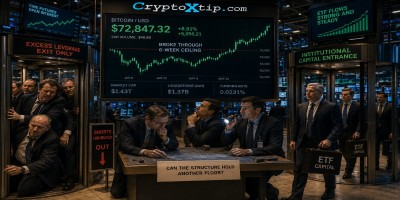
If crypto were a family gathering, Bitcoin would be the relative sitting calmly in the corner, sipping a drink, watching everyone else argue about the future. Altcoins shout, memecoins dance on the table, exchanges trend on social media—and Bitcoin just exists. Unimpressed. Unbothered. Still here.
In the current market climate, that contrast feels sharper than ever. Volatility comes and goes, narratives rotate weekly, and yet Bitcoin continues its slow, almost boring routine. Blocks are mined, transactions are confirmed, and the network doesn’t care about headlines, influencers, or price predictions drawn with colorful arrows.
Right now, Bitcoin occupies a familiar role: the benchmark, the anchor, the asset everyone references when things get weird. When markets drop, altcoins fall harder. When markets rise, they celebrate louder. Bitcoin? It moves—just not dramatically enough for anyone craving instant excitement. And that, ironically, is exactly the point.
Long-term holders have seen this movie before. The panic, the doubt, the “this time is different” speeches. They’ve learned that Bitcoin thrives not on hype, but on persistence. Every cycle produces new critics and new believers, but the protocol itself remains stubbornly unchanged. No rebranding. No flashy marketing. Just math, code, and consensus.
Meanwhile, new investors often experience Bitcoin differently. To them, it looks slow. Expensive. “Already too big.” They chase faster gains elsewhere, only to rediscover Bitcoin later—usually after a few painful lessons involving leverage, liquidity, and learning what the word “rug” really means. Bitcoin has a way of teaching patience without saying a word.
Institutional interest adds another layer to the current moment. While retail debates short-term price action, larger players focus on custody, ETFs, and long-term exposure. This creates a strange split personality in the market: short-term noise above, long-term positioning below. Bitcoin sits exactly in the middle, quietly absorbing both.
Technologically, Bitcoin hasn’t stopped evolving—it’s just doing so carefully. Incremental improvements, scaling discussions, and second-layer solutions don’t grab headlines the way memes do, but they matter. Bitcoin doesn’t rush upgrades. It waits, tests, argues, and only moves when consensus is painfully clear. That slowness isn’t a flaw, it’s a defense mechanism.
Emotionally, Bitcoin is also a mirror. When markets are euphoric, it looks conservative. When markets collapse, it looks resilient. People project expectations onto it, then blame it for not behaving like a casino. Bitcoin never promised excitement. It promised predictability in a system designed to be unpredictable.
So where does that leave Bitcoin today? Exactly where it usually is: not dead, not obsolete, not revolutionary in the daily news cycle—but quietly central. It doesn’t need to convince anyone anymore. It simply keeps working, block by block, while the rest of the market figures itself out.
In crypto, chaos is loud. Stability is boring. And Bitcoin? Bitcoin has mastered the art of being boring—and winning anyway.
Related Articles
More stories you may want to explore.


Sponsored Placements











