
Bitcoin Tests $67K as Markets Wait for Geopolitical Clarity

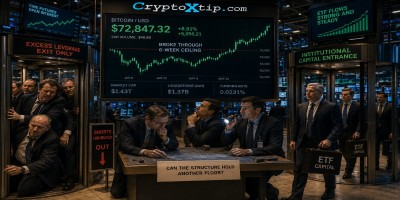
Bitcoin briefly climbed above $67,000 before surrendering part of the move as traders weighed fragile geopolitical progress and still-cautious institutional demand.
Bitcoin briefly pushed above the $67,000 mark this week, offering traders a reminder that optimism can return to the market surprisingly fast. The rally, however, proved difficult to sustain. A portion of those gains faded almost as quickly as they appeared, leaving investors with a familiar question: is risk appetite genuinely returning, or is the market simply reacting to headlines before demanding stronger evidence?
Recent price action has been heavily influenced by geopolitical developments. Reports surrounding diplomatic progress and tentative agreements in the Middle East helped improve sentiment across global markets, encouraging a broader move into risk assets, including cryptocurrencies. Bitcoin benefited from that shift, climbing toward levels not seen in nearly two weeks.
Yet the reaction was notably restrained. While traders welcomed signs of easing tensions, many remain reluctant to commit aggressively before agreements are formally confirmed and their economic consequences become clearer. Financial markets have spent much of the year learning that initial optimism and lasting stability are not always the same thing.
The result was a familiar pattern: a sharp move higher followed by equally quick profit-taking. Bitcoin's brief return above $67,000 attracted attention, but it did not immediately convince the market that a broader bullish trend had resumed.
Geopolitics Remains the Dominant Narrative
The connection between global politics and digital assets has become increasingly difficult to ignore. Bitcoin was once marketed as an asset detached from traditional financial forces. In reality, institutional participation has made the cryptocurrency market far more sensitive to macroeconomic developments than many early advocates anticipated.
Recent diplomatic signals helped improve investor confidence because they reduced fears surrounding energy markets, inflation pressures and broader economic uncertainty. When geopolitical risks decline, investors often become more willing to allocate capital toward growth-oriented and higher-volatility assets.
That dynamic has supported Bitcoin's recovery from recent lows. Several analysts have pointed to improving risk sentiment following reports of progress toward regional agreements, although many continue to emphasize that the market is waiting for concrete confirmation before fully embracing a risk-on environment. Recent trading activity suggests investors are still seeking evidence that geopolitical tensions are genuinely easing rather than merely pausing.
This caution is understandable. Markets frequently price in best-case scenarios long before policymakers finalize them. When expectations run ahead of reality, even positive developments can struggle to generate lasting momentum.
ETF Flows Tell a More Complicated Story
While geopolitical headlines have generated short-term excitement, institutional demand remains the more important long-term indicator for Bitcoin. On that front, the picture is improving, but only gradually.
Spot Bitcoin ETFs in the United States have shown signs of stabilization after enduring several weeks of capital outflows. Recent sessions produced modest inflows, breaking a pattern that had weighed heavily on market sentiment throughout late spring and early summer.
The recovery is encouraging, but it would be difficult to describe it as a decisive return of institutional enthusiasm. Large investors appear willing to test the waters again, yet the scale of buying remains far below the levels that characterized stronger periods of ETF demand earlier in the cycle.
That distinction matters. Bitcoin's relationship with spot ETFs has fundamentally changed how the market evaluates price moves. Strong rallies are increasingly expected to be supported by sustained institutional participation. Without that confirmation, traders often treat price spikes with skepticism.
Several market observers have noted that recent inflows look more like stabilization than outright accumulation. The bleeding may be slowing, but investors are still waiting for evidence that large capital allocators are prepared to meaningfully increase exposure once again.
Investors Are Watching for Confirmation
The current environment highlights a broader shift in Bitcoin's market structure. In previous cycles, retail enthusiasm frequently dominated short-term price action. Today, institutional flows, macroeconomic expectations and global liquidity conditions often play a larger role.
As a result, many investors are focusing less on the fact that Bitcoin briefly crossed $67,000 and more on what happens next. Can the asset maintain those levels? Will ETF inflows continue to improve? Do geopolitical developments translate into a more stable economic backdrop?
Those questions remain unanswered. The market has become increasingly selective about what qualifies as bullish evidence. Traders appear less interested in reacting to isolated headlines and more interested in seeing a consistent pattern of improving fundamentals.
Even sentiment indicators reflect that caution. Optimism has certainly improved compared with the fear that dominated recent weeks, but enthusiasm remains measured. The mood resembles cautious curiosity rather than outright conviction.
That may not be a bad thing. Some of the strongest advances in Bitcoin's history have emerged from periods where skepticism remained widespread. Markets rarely ring a bell before confidence returns.
Macro Conditions Continue to Matter
Beyond geopolitics, investors are also monitoring the broader macroeconomic environment. Interest rate expectations, inflation trends, bond yields and currency markets continue influencing capital flows across virtually every asset class.
Bitcoin has increasingly traded alongside broader risk assets during periods of market stress. That correlation has frustrated some long-term holders who view the asset as a unique monetary alternative, but it reflects the reality of growing institutional ownership.
Large funds tend to evaluate Bitcoin within broader portfolio frameworks rather than as a standalone ideological investment. When risk appetite weakens, crypto exposure can be reduced alongside equities and other growth-focused assets. When confidence improves, Bitcoin often benefits as part of a wider reallocation toward risk.
This evolving relationship helps explain why traders are paying such close attention to geopolitical agreements and economic indicators. The direction of Bitcoin may depend less on crypto-specific news and more on whether broader financial conditions become supportive.
For readers following additional ecosystem coverage, Crypto X Tip has repeatedly highlighted how macro liquidity and institutional behavior increasingly shape digital asset markets. Recent trading activity appears to reinforce that trend rather than challenge it.
What This Means
Bitcoin's brief move above $67,000 demonstrates that buyers remain active whenever risk sentiment improves. Yet the market's inability to hold all of those gains underscores the prevailing caution among investors.
Geopolitical progress has provided a temporary boost, but traders are still waiting for confirmation that agreements will hold and that broader economic risks are genuinely receding. At the same time, spot Bitcoin ETFs are showing signs of recovery after a difficult stretch, though institutional demand has not yet returned with enough force to remove doubts.
For now, Bitcoin sits at a crossroads between improving sentiment and lingering skepticism. The next phase is likely to depend less on headline-driven rallies and more on whether institutional capital, macro conditions and geopolitical stability begin moving in the same direction. Markets have seen enough false starts to demand proof before offering full confidence.
Related Articles
More stories you may want to explore.


Sponsored Placements











