
Bitcoin Near $80K as Wall Street Expands Crypto Push
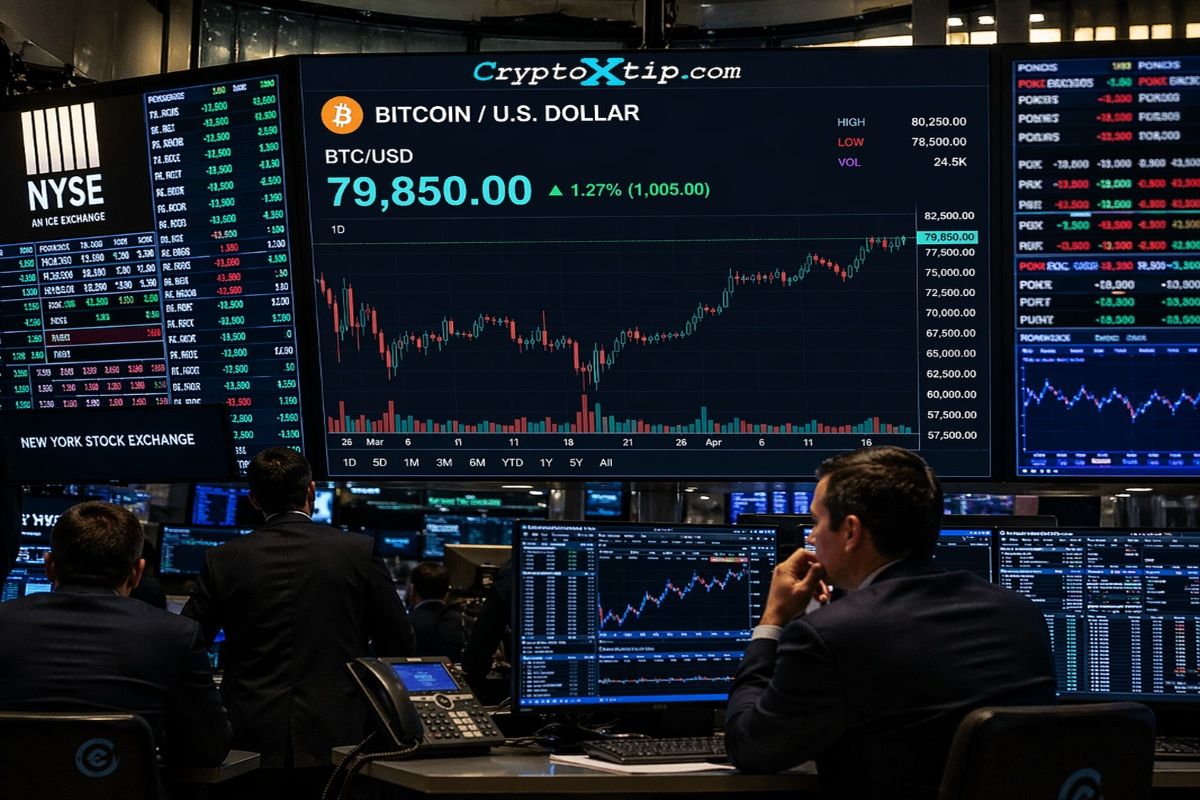
Bitcoin nears $80K as institutions expand crypto offerings and Ethereum activity surges again.
The cryptocurrency market has once again delivered a week full of major developments, blending institutional momentum, technological evolution, and shifting market sentiment.
Bitcoin is approaching a key psychological milestone, traditional financial giants are deepening their involvement in digital assets, and Ethereum continues to demonstrate its role as the backbone of decentralized finance.
Here’s a comprehensive breakdown of what happened and why it matters.
Bitcoin Pushes Toward $80,000 Again
Bitcoin is once again flirting with the $80,000 level, driven by improving market sentiment and renewed optimism across global financial markets.
The recent rally is partly fueled by easing geopolitical tensions and a broader recovery in risk assets. Crypto markets have historically been highly sensitive to macroeconomic conditions, and the latest developments have encouraged investors to increase exposure.
However, analysts warn that the rally may face resistance. Many investors who entered the market through ETFs or during previous peaks may look to exit positions near break-even levels, creating selling pressure in the $78,000–$83,000 range.
This suggests that while momentum remains strong, Bitcoin’s path upward may not be as smooth as bulls would hope.
Wall Street Accelerates Its Crypto Expansion
One of the most significant themes of the week is the continued expansion of traditional financial institutions into crypto.
Charles Schwab confirmed plans to launch direct spot trading for Bitcoin and Ethereum, integrating crypto into its existing brokerage ecosystem.
This move reflects growing client demand for digital assets and represents a major step toward mainstream adoption. Schwab’s approach allows investors to manage crypto alongside traditional investments, eliminating the need for separate platforms.
The company plans to charge around 0.75% per trade, positioning itself as a service tailored more toward long-term investors than high-frequency traders.
Meanwhile, Goldman Sachs has filed for a Bitcoin-focused ETF, signaling that even the most traditional financial institutions are now actively building crypto products.
This wave of institutional involvement is no longer speculative—it is happening in real time, reshaping how investors interact with digital assets.
Kraken Gains Institutional Backing and Eyes IPO
Crypto exchange Kraken also made headlines this week, but for a very different reason.
Germany’s Deutsche Börse invested $200 million into Kraken’s parent company, valuing the business at approximately $13.3 billion.
This investment highlights a growing partnership between traditional financial infrastructure and crypto-native companies, particularly in areas such as custody, settlement, and tokenized assets.
At the same time, Kraken is reportedly preparing for a potential IPO, which would mark another milestone in the integration of crypto firms into mainstream financial markets.
These developments suggest that crypto exchanges are evolving from disruptive outsiders into established financial players.
Ethereum Continues to Dominate as Infrastructure
While Bitcoin captures headlines, Ethereum continues to quietly strengthen its position as the foundation of the digital economy.
The network remains the leading platform for DeFi, stablecoins, and smart contracts, supporting a large share of on-chain activity and liquidity.
Recent data indicates that Ethereum’s usage remains strong, driven by increased adoption of decentralized applications and scaling solutions such as layer-2 networks.
This highlights an important shift in the crypto market: value is no longer driven purely by speculation but increasingly by real-world usage.
As institutional interest grows, Ethereum’s role as financial infrastructure may become even more critical.
Market Outlook: Momentum Meets Uncertainty
Despite strong developments, the crypto market remains in a delicate balance between optimism and caution.
On one hand, institutional adoption is accelerating, infrastructure is improving, and market sentiment is recovering. On the other hand, macroeconomic uncertainty and potential selling pressure could limit short-term gains.
The coming weeks will likely be shaped by a combination of geopolitical developments, monetary policy expectations, and continued flows into crypto-related products.
For now, one thing is clear: crypto is no longer operating on the fringes of finance. It is becoming deeply integrated into the global financial system.
Final Thoughts
This week reinforced a key narrative: the crypto market is evolving.
Bitcoin is testing critical levels, institutions are building real products, and Ethereum is proving its long-term utility beyond price speculation.
While volatility remains part of the journey, the direction is increasingly clear—crypto is moving from hype to infrastructure.
And if the current trend continues, the next phase of growth may look very different from anything we have seen before.
Related Articles
More stories you may want to explore.



Sponsored Placements











