
Binance Pushes Deeper Into Gamified Trading
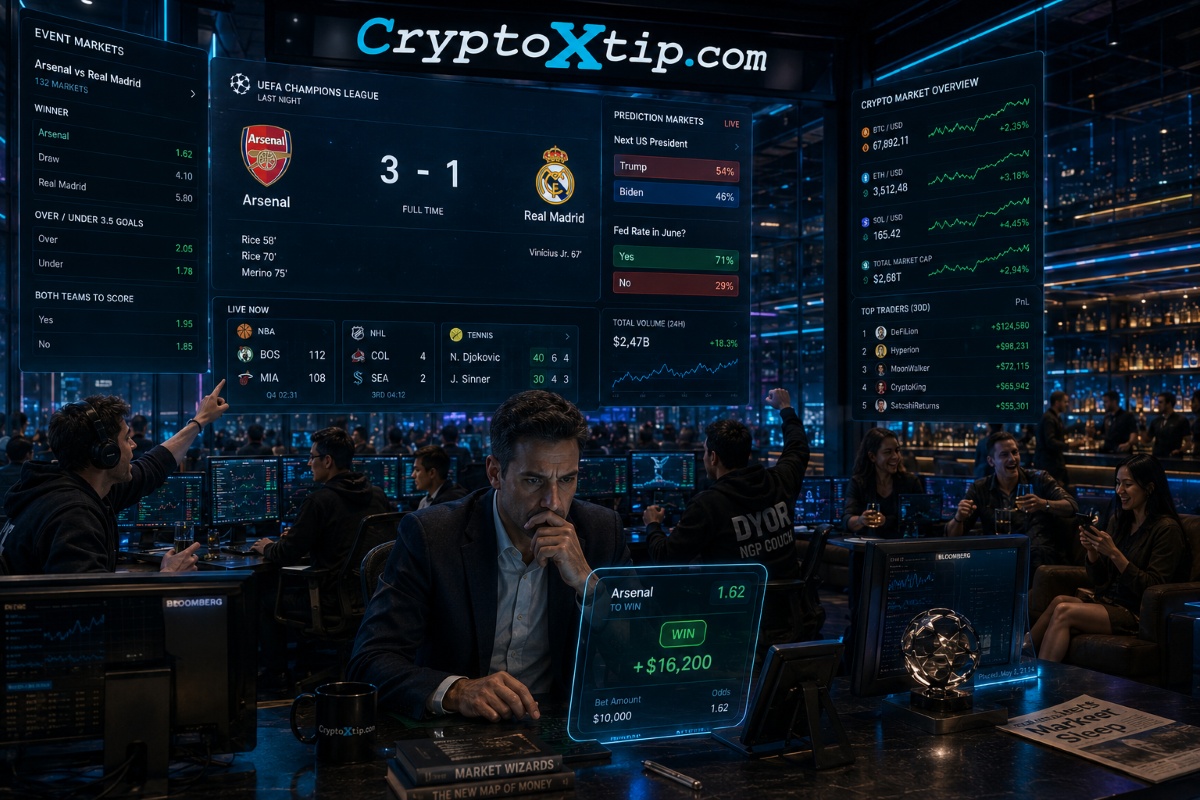
Binance is expanding into on-chain event trading products, signaling that crypto exchanges increasingly see speculation, prediction markets, and trading entertainment converging.
Crypto exchanges are no longer competing only on liquidity, token listings, or trading fees.
Increasingly, they are competing for attention.
Binance’s latest expansion into on-chain event trading products highlights how quickly the industry is evolving toward more interactive and heavily gamified forms of speculation. The exchange is introducing systems that allow users to trade outcomes tied to real-world events, market developments, and ecosystem-specific scenarios directly inside the broader Binance environment.
The move reflects a wider trend already spreading across both centralized and decentralized crypto markets: trading is becoming more social, more prediction-driven, and increasingly designed around continuous engagement rather than traditional investing behavior.
In practice, event trading products sit somewhere between derivatives, prediction markets, and digital betting systems. Users speculate on whether specific events will occur, with payouts determined by predefined outcomes tied to price movements, political developments, ecosystem milestones, or market activity.
Traditional finance experimented with similar structures for years, usually wrapped in institutional language complicated enough to discourage normal human curiosity. Crypto simply removed most of the formalities and added push notifications.
Exchanges Are Becoming Interactive Financial Platforms
Binance’s expansion into event-based products is not happening in isolation.
Across the industry, exchanges increasingly resemble hybrid platforms combining trading infrastructure, social engagement systems, gaming mechanics, prediction tools, and financial entertainment features.
The underlying business logic is straightforward.
Spot trading volumes fluctuate heavily during slower market periods. Event-driven products create new forms of user activity that keep traders engaged regardless of broader market direction. Whether Bitcoin rallies, consolidates, or collapses, users can still speculate on volatility, narratives, token launches, macro events, or ecosystem outcomes.
Engagement has become one of crypto’s most valuable economic resources.
Platforms capable of maintaining user attention during quiet market conditions tend to retain liquidity, transaction flow, and ecosystem relevance more effectively than competitors relying solely on traditional spot trading activity.
This is particularly important as exchanges face mounting pressure from lower fees, regulatory costs, and growing competition from decentralized protocols.
Prediction-style products also fit naturally with crypto’s existing user culture.
Crypto traders already spend enormous amounts of time speculating on narratives, market catalysts, ETF approvals, token unlocks, elections, protocol launches, and macroeconomic events. Event trading simply formalizes that behavior into structured financial products.
In some ways, crypto markets were always unofficial prediction markets pretending to be investment platforms.
The Rise of Financial Gamification
The broader trend surrounding Binance’s launch is the continuing gamification of trading itself.
Over the past several years, crypto platforms increasingly adopted design mechanics commonly associated with gaming, social media, and behavioral engagement systems. Leaderboards, trading competitions, referral loops, achievement systems, copytrading tools, instant notifications, and prediction-based interfaces have become standard across large parts of the industry.
The objective is not subtle: increase participation frequency.
Modern digital platforms understand that users engage more consistently when systems create short feedback loops, emotional stimulation, and social reinforcement. Crypto exchanges have learned these lessons particularly quickly because speculative behavior already produces naturally high engagement dynamics.
Event trading products intensify that environment by turning news cycles and market narratives into instantly tradeable experiences.
A user no longer simply reads headlines about a macroeconomic announcement or token event. They can immediately place a position tied directly to the outcome itself.
Supporters argue this evolution improves market efficiency and expands financial participation.
Prediction-style markets can theoretically aggregate crowd sentiment, improve information discovery, and create more dynamic trading opportunities beyond simple directional price speculation.
Critics see something else entirely.
Behavioral finance researchers have repeatedly warned that highly gamified trading environments can encourage impulsive decision-making, overtrading, addiction-like engagement patterns, and excessive risk-taking among retail users.
Crypto markets already operate with elevated emotional intensity compared to traditional finance. Adding game-like engagement mechanics to leveraged speculation creates an environment some analysts compare less to investing and more to interactive entertainment economics.
The distinction matters because user behavior changes dramatically when financial activity begins feeling psychologically similar to gaming systems.
Why On-Chain Integration Matters
One notable aspect of Binance’s expansion is the growing emphasis on on-chain functionality.
Large centralized exchanges increasingly recognize that future crypto infrastructure will likely involve hybrid systems combining centralized liquidity with decentralized settlement layers and blockchain-native financial products.
For years, centralized exchanges and decentralized finance protocols competed aggressively for users and liquidity. Recently, the boundaries between those sectors have started blurring.
Major exchanges now integrate wallet functionality, DeFi access, staking systems, Web3 tools, and on-chain financial products directly into their ecosystems.
Event trading fits naturally into that convergence.
Blockchain infrastructure allows programmable settlement, transparent market creation, tokenized participation models, and potentially global accessibility that traditional derivatives systems struggle to replicate efficiently.
At the same time, centralized exchanges still provide smoother onboarding, deeper liquidity, customer support infrastructure, and operational simplicity attractive to mainstream users.
The result is an emerging hybrid model where centralized platforms increasingly adopt decentralized product structures while maintaining familiar exchange interfaces.
Binance appears to be positioning itself directly inside that transition.
The company has spent the past year expanding Web3 integrations, wallet services, launchpool ecosystems, and on-chain participation tools while simultaneously navigating ongoing regulatory pressure across multiple jurisdictions.
That balancing act reflects a larger industry reality.
Crypto exchanges no longer function merely as marketplaces for buying and selling tokens. They increasingly operate as financial operating systems competing for long-term ecosystem participation.
Regulators Will Likely Pay Attention
The growth of event trading products almost guarantees additional regulatory scrutiny.
Prediction markets and event-based financial contracts exist in a legally sensitive category across many jurisdictions because they can resemble gambling products, derivatives markets, or unlicensed financial instruments depending on structure and accessibility.
Regulators globally have already increased focus on crypto derivatives, leveraged trading products, and retail investor protections following multiple high-profile market collapses in recent years.
Event trading products introduce additional complexity because they often blend elements of financial speculation and betting behavior simultaneously.
Some policymakers argue prediction markets provide legitimate economic value by aggregating information and market expectations. Others view heavily gamified speculation products as consumer protection risks, particularly for inexperienced retail participants.
Crypto’s regulatory history suggests the industry often moves faster than legal interpretation frameworks can adapt.
That pattern appears likely to continue here.
Exchanges launching these systems may eventually need to implement stricter geographic restrictions, compliance layers, user qualification systems, or product limitations depending on how regulators classify event-based markets in different jurisdictions.
The tension between innovation and regulation remains one of crypto’s defining structural themes.
And historically, products generating the fastest retail engagement tend to attract the fastest political attention as well.
Retail Trading Culture Continues Evolving
What Binance’s move ultimately reveals is how deeply retail trading culture inside crypto continues evolving beyond traditional investment models.
Speculation is becoming increasingly interactive, narrative-driven, and socially integrated. Traders no longer simply react to markets. They participate continuously in ecosystems built around attention, engagement, and real-time event interpretation.
Much of crypto’s current infrastructure race revolves around retaining user engagement rather than merely facilitating transactions. As noted recently in additional ecosystem coverage at Crypto X Tip
That shift changes how exchanges design products, how traders behave, and how liquidity flows across digital markets.
The future of crypto trading may look less like traditional investing terminals and more like constantly evolving interactive financial environments where speculation, entertainment, and social participation increasingly overlap.
Whether that represents healthy financial innovation or simply more sophisticated engagement engineering remains heavily debated.
Possibly both.
What This Means
Binance’s expansion into on-chain event trading products reflects a broader transformation happening across crypto markets.
Trading platforms are increasingly evolving into engagement ecosystems where prediction markets, gamification, social interaction, and financial speculation merge together.
For exchanges, these products create new activity streams and stronger user retention during unpredictable market cycles.
For traders, they offer faster and more interactive ways to speculate on narratives, events, and market psychology itself.
But the risks should not be ignored.
Gamified trading environments can encourage impulsive behavior, excessive risk-taking, and emotional overexposure — particularly among retail users drawn into highly reactive speculative systems.
Still, the direction of the industry is becoming increasingly clear.
Crypto is no longer only building alternative financial infrastructure. It is building entirely new forms of financial participation optimized for digital attention economies.
And as exchanges continue blending markets with entertainment mechanics, the line between trading platform and interactive speculation arena grows thinner by the quarter.
Related Articles
More stories you may want to explore.


Sponsored Placements











