
Ancient Bitcoin Whale Move Sparks Market Speculation
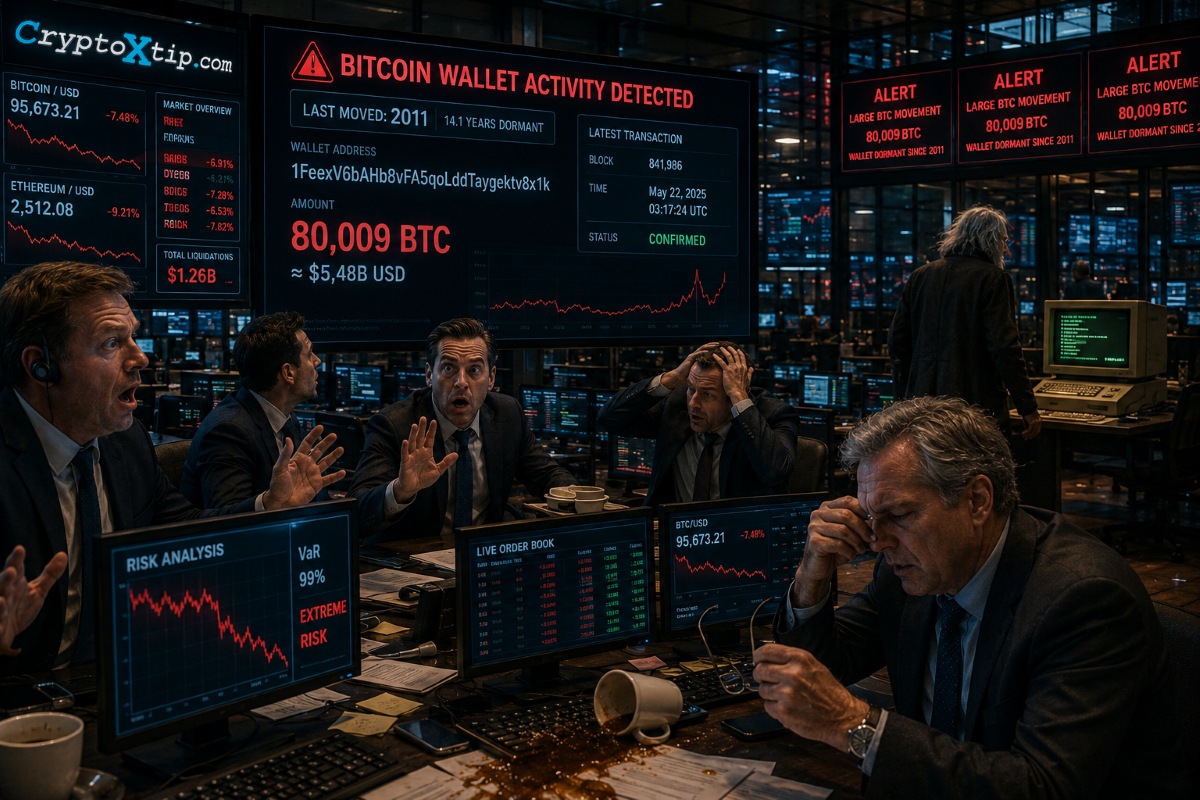
A transfer of more than 2,600 BTC from “Satoshi era” wallets to FalconX and Cumberland has reignited trader concerns about potential selling pressure.
Bitcoin markets have a habit of becoming deeply emotional whenever very old wallets suddenly wake up.
This week, blockchain analysts and market participants closely tracked the movement of more than 2,600 BTC linked to long-dormant “Satoshi era” addresses toward trading firms including FalconX and Cumberland. The transfers immediately triggered speculation across crypto markets about whether another major whale may be preparing to sell.
Large movements from wallets dating back to Bitcoin’s earliest years tend to attract outsized attention because they carry both financial and psychological significance. These are not newly accumulated exchange balances or short-term speculative holdings. They are coins that survived multiple market cycles, crashes, regulatory battles, and enough volatility to emotionally damage several generations of traders.
When dormant Bitcoin from the early mining era suddenly moves, markets notice.
That does not automatically mean selling pressure is imminent. But traders rarely wait patiently for certainty before reacting to whale activity.
Why “Satoshi Era” Wallets Matter
The term “Satoshi era” generally refers to Bitcoin mined or accumulated during the network’s earliest years between 2009 and roughly 2011, when Bitcoin had little mainstream attention and mining difficulty remained extremely low by modern standards.
Many of these early wallets have remained inactive for years or even more than a decade. Their owners are often unknown, inaccessible, or presumed to have permanently lost access to the coins entirely.
Because of that, movements from such addresses create immediate intrigue.
Blockchain analytics firms closely monitor dormant wallet activity because large transfers from old holders can sometimes signal intentions to sell, restructure custody arrangements, enter OTC transactions, or shift assets toward institutional services.
In this case, on-chain observers identified flows connected to trading infrastructure associated with FalconX and Cumberland, two major institutional crypto trading firms heavily involved in over-the-counter liquidity and large-scale market execution.
That distinction is important.
Transfers to institutional trading desks do not necessarily imply immediate public exchange dumping. OTC firms frequently facilitate private transactions designed to minimize visible market disruption.
Still, the market often interprets these moves conservatively at first.
Bitcoin traders tend to treat ancient whale transfers the way financial markets treat unexpected central bank statements: nobody knows exactly what will happen next, but everyone suddenly feels uncomfortable pretending supply dynamics are stable.
Whale Psychology Still Shapes Crypto Markets
Despite Bitcoin’s growing institutionalization, crypto markets remain highly sensitive to large holder behavior.
Part of that sensitivity comes from Bitcoin’s supply structure itself.
A relatively small percentage of wallets control a substantial share of total BTC supply, particularly coins accumulated during Bitcoin’s early years. Many of these holdings rarely move, which means sudden activity naturally draws attention from traders attempting to anticipate market direction.
Whale transfers create psychological pressure even before any actual selling occurs.
Markets constantly try to price future expectations rather than only present conditions. If traders believe large dormant holders may distribute coins into the market, risk appetite can weaken quickly regardless of whether meaningful spot selling ultimately materializes.
This dynamic becomes even more amplified during periods of elevated leverage and speculative positioning.
Crypto markets are exceptionally narrative-driven. Traders monitor exchange inflows, ETF activity, miner balances, stablecoin issuance, whale movements, macroeconomic signals, and social sentiment simultaneously. A single high-profile wallet transfer can suddenly dominate market psychology for an entire trading session.
Part of this reaction is rational. Large Bitcoin movements genuinely can impact liquidity conditions depending on timing and execution methods.
Part of it is cultural.
Bitcoin’s early wallets occupy almost mythical status within crypto markets. Coins untouched for more than a decade feel historically important in ways traditional financial assets rarely do.
When they move, markets interpret the event almost like an archaeological discovery combined with a potential liquidity shock.
OTC Desks Complicate Market Interpretation
One reason whale movements can be difficult to interpret accurately is the growing role of institutional OTC infrastructure.
Firms such as FalconX and Cumberland specialize in facilitating large crypto transactions for institutions, high-net-worth clients, funds, miners, and major market participants.
These transactions are often executed privately to avoid causing major volatility on public exchanges.
In earlier crypto cycles, large holders frequently relied directly on centralized exchanges for liquidity, which sometimes created dramatic visible sell pressure and rapid order book dislocations.
Today’s institutional market structure is more sophisticated.
Large BTC holders increasingly use OTC desks, algorithmic execution systems, and private liquidity networks capable of distributing transactions more gradually across multiple venues.
That evolution has reduced some forms of visible market shock compared to earlier years.
However, OTC activity can still influence broader market conditions indirectly.
If institutional desks absorb large quantities of BTC from long-term holders, those coins may eventually enter broader circulation through counterparties, funds, or liquidity providers over time. The impact becomes less immediate but not necessarily irrelevant.
This creates an important distinction between short-term volatility and long-term supply dynamics.
Markets often react aggressively to whale transfer headlines even when the actual liquidity effect unfolds slowly or remains relatively contained.
Crypto traders are known for occasionally treating every blockchain transfer like the opening scene of a financial apocalypse movie.
Sometimes the coins are simply moving between custody systems.
Sometimes they are not.
Dormant Supply Is Becoming Increasingly Important
One broader trend making these events more significant is the growing importance of dormant supply in Bitcoin markets.
Over the years, a substantial percentage of Bitcoin supply has become effectively illiquid through long-term holding behavior, institutional custody, lost wallets, or strategic treasury allocation.
Many analysts argue that Bitcoin’s “available float” is far smaller than headline supply figures suggest.
That matters because even relatively modest changes in active circulating supply can influence liquidity conditions during periods of strong demand.
Institutional adoption, ETF participation, sovereign reserve discussions, and corporate treasury accumulation have all increased focus on Bitcoin’s long-term scarcity dynamics.
As a result, old whale movements increasingly carry symbolic importance beyond their immediate market value.
A dormant wallet becoming active potentially signals that previously inactive supply may re-enter broader market circulation.
At the same time, not all whale activity is bearish.
Some long-term holders move assets for estate planning, custody upgrades, diversification, institutional onboarding, collateralization strategies, or internal restructuring. Blockchain transfers alone rarely reveal intent with complete certainty.
The market nevertheless tends to react first and analyze calmly later.
Institutional Bitcoin Markets Are Maturing
One interesting aspect of the current cycle is how much more institutionalized Bitcoin market infrastructure has become compared to previous eras.
In earlier years, large whale movements often produced immediate panic due to thinner liquidity and less sophisticated execution systems.
Today, Bitcoin operates inside a significantly more mature ecosystem involving ETFs, institutional custodians, regulated trading firms, derivatives infrastructure, and professional market-making operations.
That maturity does not eliminate volatility, but it changes how large transfers interact with market structure.
Institutional liquidity providers now play a larger role in absorbing or redistributing large BTC flows without creating the same level of visible disruption seen during earlier cycles.
At the same time, crypto markets remain unusually sensitive to sentiment.
Even sophisticated markets can react emotionally when old wallets suddenly awaken after more than a decade of silence.
Bitcoin’s market behavior increasingly reflects a strange hybrid between institutional finance infrastructure and internet-native crowd psychology. As noted recently in additional ecosystem coverage at Crypto X Tip
That combination creates markets where billion-dollar ETF flows and decade-old whale wallets can influence sentiment within the same trading session.
What This Means
The movement of more than 2,600 BTC from dormant “Satoshi era” wallets toward institutional trading platforms has once again reminded markets how closely whale behavior still influences Bitcoin sentiment.
While transfers to firms like FalconX and Cumberland do not automatically confirm imminent selling, they naturally raise questions about whether previously inactive supply may be preparing to re-enter circulation.
For traders, the event highlights the ongoing importance of on-chain monitoring and liquidity analysis in modern crypto markets.
For the broader industry, it also demonstrates how Bitcoin’s oldest holders continue shaping market psychology more than fifteen years after the network’s creation.
Bitcoin may be increasingly institutionalized, but it still carries traces of its early underground history in ways traditional financial assets rarely do.
And when ancient wallets suddenly move, the market still reacts with the same mixture of fascination, anxiety, and speculative imagination that has defined crypto trading culture from the beginning.
Related Articles
More stories you may want to explore.



Sponsored Placements











