
Solana ETF Speculation Fuels Institutional Optimism
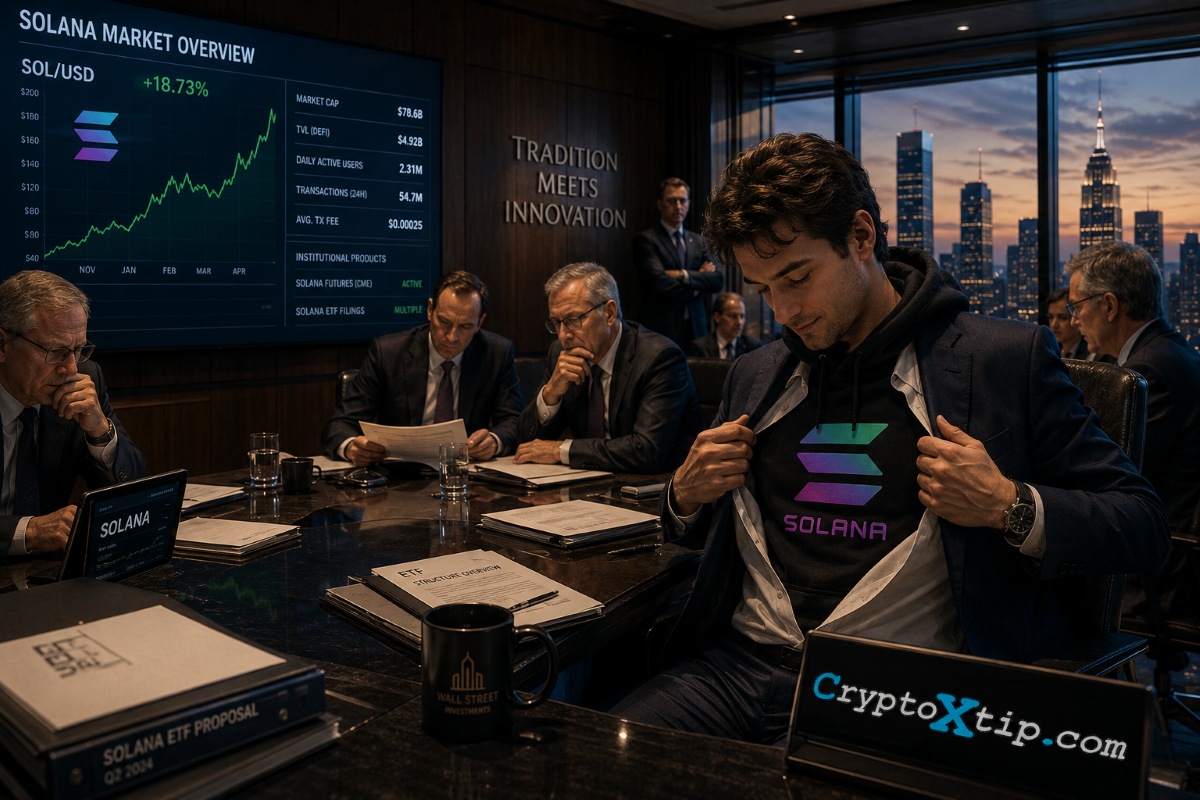
New investment products and growing discussion around potential Solana-linked ETFs are strengthening optimism that institutional adoption of the network could accelerate further.
Crypto markets have an extraordinary ability to turn regulatory paperwork into speculative entertainment.
Few examples illustrate that better right now than Solana.
The blockchain network has become one of the central topics in institutional crypto discussions as traders, asset managers and analysts increasingly focus on the possibility of investment products tied directly to Solana, including potential exchange-traded funds.
Recent developments surrounding filings, structured products and broader institutional positioning have intensified optimism across the Solana ecosystem, helping reinforce the perception that the network is gradually moving from speculative altcoin territory toward something closer to mainstream digital asset infrastructure.
That transition remains incomplete and heavily dependent on regulation, liquidity conditions and institutional appetite. Still, the conversation itself matters.
In modern crypto markets, perception often arrives several quarters before reality. Occasionally several years.
Institutional Attention Around Solana Is Growing
Recent reporting from major crypto and financial media outlets has highlighted increasing institutional interest in Solana-linked investment products, particularly after the success of spot Bitcoin ETFs reshaped expectations around digital asset exposure in traditional finance.
Several asset managers and market participants have reportedly explored structures tied to Solana exposure, while broader discussions continue around whether regulators may eventually become more receptive to additional crypto-based exchange-traded products beyond Bitcoin and Ethereum.
The growing attention reflects Solana’s evolution over the past two years.
Once viewed primarily as a high-speed alternative blockchain associated heavily with speculative trading activity and NFT culture, Solana has increasingly positioned itself as a broader infrastructure ecosystem supporting decentralized finance, payments, tokenization and consumer-facing blockchain applications.
Institutional investors appear to be paying closer attention to that shift.
Part of the optimism also stems from changing market psychology after spot Bitcoin ETF approvals demonstrated that regulated crypto investment products can attract meaningful capital from traditional financial markets.
That success has encouraged speculation around which blockchain ecosystems could eventually follow a similar path.
Solana frequently appears near the top of those discussions because of its liquidity profile, developer activity and growing ecosystem relevance.
The network’s supporters argue that Solana has matured significantly operationally after earlier periods marked by network outages and infrastructure criticism.
Critics remain unconvinced, though fewer are casually dismissing the ecosystem entirely the way they once did.
Why ETF Discussions Matter So Much
The crypto market’s fixation on ETFs is not simply about headlines or regulatory theater.
Institutional investment products matter because they potentially create easier access for pension funds, wealth managers, hedge funds and retail brokerage platforms that otherwise face operational or compliance barriers when purchasing digital assets directly.
For networks like Solana, the existence of regulated financial products could dramatically expand visibility among traditional investors unfamiliar with decentralized ecosystems.
An ETF does not automatically guarantee massive inflows or long-term price appreciation. Markets occasionally behave as though filing paperwork itself creates intrinsic value, which remains one of finance’s more charming delusions.
Still, institutional accessibility changes the conversation.
Traditional finance generally prefers exposure through familiar structures. Wallet management, private key security and decentralized governance proposals are not naturally aligned with how most institutional compliance departments prefer spending their afternoons.
ETFs simplify that process by wrapping digital assets inside conventional financial infrastructure.
That simplicity carries strategic importance for blockchain ecosystems competing for long-term institutional relevance.
The growing discussion around Solana-related products therefore extends beyond short-term speculation. It reflects broader questions about which blockchain networks may ultimately become integrated into regulated investment markets.
Solana’s Ecosystem Expansion Supports the Narrative
The institutional optimism surrounding Solana is also tied closely to the network’s recent ecosystem growth.
Over the past year, Solana has experienced renewed developer activity across decentralized finance, consumer applications, stablecoin infrastructure and tokenized asset initiatives.
Several major crypto firms have expanded integrations tied to Solana-based products, while payment infrastructure and decentralized trading activity on the network have remained relatively strong compared with many competing ecosystems.
The network’s technical strengths continue attracting attention as well.
Supporters consistently point to Solana’s transaction throughput, lower fees and scalable architecture as competitive advantages for high-volume blockchain applications.
Those features have helped the ecosystem regain momentum after earlier market cycles where operational outages damaged confidence.
Crypto markets have a surprisingly short memory when liquidity returns. Infrastructure failures that once inspired dramatic declarations about “network death” often become historical footnotes during the next rally phase.
That does not mean earlier concerns disappeared entirely.
Institutional investors evaluating Solana still weigh questions surrounding decentralization, validator concentration and historical network reliability.
Some analysts continue arguing that Solana’s architecture prioritizes performance at the expense of broader decentralization principles associated with older blockchain networks.
Others counter that practical scalability matters more for mainstream adoption than ideological purity tests performed on social media.
The debate remains unresolved, though markets increasingly appear willing to tolerate those trade-offs if the ecosystem continues expanding.
Altcoin Competition Is Intensifying
The growing focus on Solana also reflects a broader shift occurring across the altcoin market.
Institutional investors are beginning to evaluate digital asset ecosystems less as isolated speculative trades and more as competing infrastructure platforms with different technological strengths and economic models.
That transition creates both opportunity and pressure.
For Solana, institutional momentum could strengthen if the network continues attracting developers, liquidity and financial integrations while maintaining operational stability.
At the same time, competition remains fierce.
Ethereum continues dominating decentralized finance and institutional tokenization discussions. Layer-2 ecosystems are expanding rapidly. Competing smart contract networks continue pursuing enterprise partnerships and scalability improvements of their own.
The crypto industry remains deeply fragmented despite constant promises of interoperability and ecosystem collaboration.
Every blockchain wants institutional adoption. Preferably with everyone else’s liquidity migrating over quietly afterward.
Solana nevertheless occupies an increasingly important position inside that competitive landscape because it combines strong retail engagement with growing institutional visibility.
That combination is relatively rare in crypto markets, where ecosystems often lean heavily toward either speculative retail enthusiasm or slower-moving institutional development cycles.
Macro Conditions Still Influence Everything
Even with improving institutional sentiment, Solana and the broader altcoin sector remain heavily exposed to macroeconomic conditions.
Rising Treasury yields, uncertain monetary policy and shifting global liquidity continue influencing appetite for speculative technology assets across both traditional finance and crypto markets.
Institutional adoption narratives tend to perform best when broader financial conditions support risk-taking behavior.
If liquidity tightens significantly or recession concerns intensify, even strong ecosystem developments may struggle to generate sustained momentum across altcoins.
That dynamic helps explain why traders remain cautious despite increasing optimism around Solana-related products.
Markets have become more sophisticated about distinguishing between long-term structural adoption and shorter-term speculative enthusiasm.
The possibility of future ETFs or institutional products may strengthen confidence around Solana’s strategic positioning, but those developments alone do not eliminate volatility or broader market risk.
Crypto remains highly sensitive to global financial conditions regardless of how many institutional presentations include the phrase “digital asset infrastructure.”
Additional ecosystem coverage and curated crypto projects can also be found through: Crypto X Tip
What This Means
The growing discussion surrounding Solana-linked investment products and potential ETF structures highlights how quickly institutional attention around the network has evolved.
Solana is increasingly being viewed not merely as a speculative altcoin ecosystem, but as a blockchain infrastructure platform capable of attracting broader financial market participation if regulatory conditions continue improving.
That shift carries meaningful implications for both the Solana ecosystem and the wider altcoin sector.
Institutional accessibility through regulated investment products could eventually expand liquidity, visibility and adoption across networks viewed as credible long-term infrastructure plays.
At the same time, optimism around future ETFs remains partly speculative and heavily dependent on evolving regulatory frameworks and macroeconomic conditions.
For now, the market appears to be pricing in possibility more than certainty — a familiar habit in crypto finance.
Still, the conversation itself reflects a broader reality: institutional investors are no longer asking whether blockchain ecosystems matter. They are increasingly debating which ones deserve a permanent seat inside traditional financial markets.
Related Articles
More stories you may want to explore.



Sponsored Placements











