
Solana Emerges as Major ETF Contender
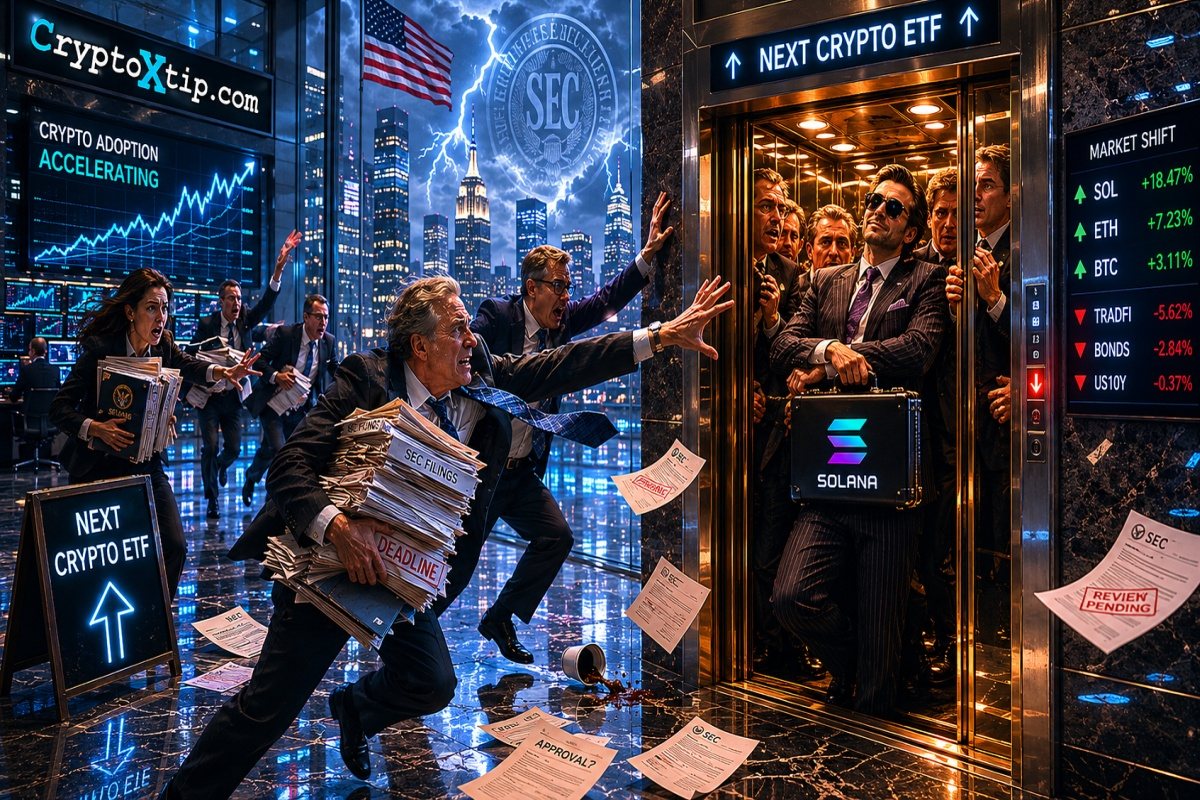
Solana is increasingly viewed as one of the strongest candidates for future U.S. spot crypto ETFs as regulators appear more open to streamlined approvals.
Solana is once again finding itself at the center of one of crypto’s favorite market obsessions: the ETF race.
After Bitcoin and Ethereum established the first real bridge between digital assets and mainstream investment products, attention has steadily shifted toward which cryptocurrency could become the next serious candidate for a U.S. spot exchange-traded fund. Solana now sits near the top of that list.
Several major asset managers have already submitted filings tied to spot Solana ETFs, including VanEck, Fidelity, Franklin Templeton, Grayscale, 21Shares and Bitwise. The growing queue reflects a broader belief inside both crypto and traditional finance that Solana may eventually become the first large-cap altcoin to follow Bitcoin and Ethereum into regulated ETF markets.
That possibility has gained momentum as the U.S. Securities and Exchange Commission appears increasingly willing to modernize how crypto investment products are reviewed and approved.
Recent reporting from Reuters and CoinDesk suggests regulators have been engaging more actively with issuers seeking Solana ETF approvals, including requests for amended filings and technical clarifications. While no final approval has been granted, the tone surrounding discussions has become noticeably less hostile compared to earlier regulatory cycles.
Crypto markets have learned to treat even mild bureaucratic optimism as a speculative catalyst. Sometimes all it takes is a revised filing and a few carefully worded comments from analysts for traders to start behaving like approval is already inevitable.
Why Solana Keeps Appearing in ETF Discussions
Solana’s growing presence in ETF conversations is not happening by accident.
The blockchain has spent the past several years evolving from a highly speculative “Ethereum challenger” into one of the largest and most commercially active crypto ecosystems in the market. Despite periods of volatility and criticism surrounding network outages, Solana has maintained strong developer activity, significant stablecoin usage and a rapidly expanding decentralized finance ecosystem.
Its relatively fast transaction speeds and lower fees have also made it popular among retail-focused applications, including meme coin trading and on-chain consumer platforms. In crypto, technological sophistication often matters less than whether users actually show up. Solana, for better or worse, continues attracting users.
Institutional interest has followed.
Several traditional financial firms increasingly view Solana as one of the few crypto networks with enough liquidity, market relevance and infrastructure maturity to support a regulated ETF product. That distinction matters because the SEC has historically prioritized assets with deeper trading markets and stronger institutional custody solutions.
Reuters previously reported that exchange operator Cboe submitted filings for Solana ETFs tied to products from VanEck and 21Shares, officially starting the SEC review process. Since then, the list of applicants has expanded considerably as firms position themselves ahead of potential regulatory changes.
The logic is straightforward: if Bitcoin ETFs generated billions in inflows and Ethereum products opened the door for broader crypto exposure, Wall Street naturally wants to know what comes next.
Solana currently appears to be one of the most commercially viable answers.
The SEC’s Evolving Position
The biggest question surrounding Solana ETFs has never been demand. It has always been regulation.
Under former SEC leadership, Solana faced repeated legal uncertainty after the agency referenced SOL as a potential unregistered security in lawsuits involving major crypto exchanges. That classification complicated ETF discussions because regulators traditionally avoid approving spot products tied to assets under unresolved legal scrutiny.
The environment has since shifted.
The SEC’s broader posture toward crypto appears more flexible than it was during the peak enforcement-heavy years. Recent legislative momentum around digital asset regulation, combined with pressure from institutional finance, has encouraged a more structured approach toward crypto oversight.
Reuters recently reported that SEC officials have been working through amended Solana ETF filings submitted by multiple issuers. While sources familiar with the process noted there is still “no sense of urgency” inside the agency, continued engagement itself is widely viewed as a constructive sign.
Markets often interpret regulatory silence as danger. Active dialogue, even slow dialogue, tends to be treated as progress.
At the same time, analysts remain cautious about assuming approval is guaranteed.
One major issue remains the SEC’s historical preference for crypto assets with established regulated futures markets. Bitcoin and Ethereum both had futures trading on the Chicago Mercantile Exchange long before spot ETFs were approved.
That requirement is gradually becoming less of an obstacle for Solana.
CME Group announced plans for Solana futures contracts earlier this year, a development many analysts viewed as a critical step toward improving the asset’s ETF eligibility. Regulated futures markets help regulators monitor pricing behavior and reduce concerns around market manipulation — an argument the SEC repeatedly emphasized during earlier ETF battles.
In crypto regulation, infrastructure matters almost as much as ideology. Possibly more.
A Simpler ETF Process Could Change Everything
One of the most important developments for Solana may not involve Solana specifically at all.
The SEC has recently explored ways to simplify how crypto ETFs are approved, potentially moving away from the lengthy and highly customized case-by-case reviews that defined earlier applications.
According to Reuters, the agency has considered broader listing standards that would allow exchanges to approve certain crypto ETF products through a more streamlined process. Industry participants believe such changes could dramatically accelerate approvals for assets beyond Bitcoin and Ethereum.
If those reforms fully materialize, Solana could become one of the largest immediate beneficiaries.
Unlike smaller speculative crypto projects, Solana already possesses many of the characteristics institutions look for:
- Large market capitalization
- Strong exchange liquidity
- Active derivatives markets
- Established custody infrastructure
- High retail and developer activity
- Growing institutional familiarity
That combination makes it easier for issuers to argue that Solana can support a mature investment product suitable for mainstream investors.
The timing also matters politically.
The current U.S. regulatory climate has become increasingly focused on integrating crypto into existing financial systems rather than isolating it entirely. Proposed legislation aimed at clarifying crypto oversight, including efforts tied to broader market structure reforms, has improved sentiment across the industry.
Institutional investors appear increasingly comfortable treating crypto as a permanent asset category rather than a temporary speculative phase.
That shift does not eliminate risk, but it changes the conversation.
Risks Still Surround the Narrative
Despite growing optimism, several obstacles could still delay or complicate Solana ETF approvals.
Regulators continue to monitor concerns around market concentration, token classification and network stability. Solana’s history of outages remains a recurring criticism among skeptics who question whether the blockchain is sufficiently resilient for large-scale institutional products.
Critics also argue that ETF enthusiasm may exaggerate the practical impact on adoption itself.
Bitcoin ETFs succeeded partly because Bitcoin already functioned as a macro asset with broad public recognition and institutional legitimacy. Solana occupies a different market category. It is a smart-contract blockchain competing inside a crowded and rapidly evolving ecosystem where user behavior can shift quickly.
That creates more uncertainty around long-term investor demand.
There is also the broader macroeconomic backdrop to consider. Crypto ETFs tend to perform best during periods of strong liquidity and investor appetite for risk assets. If interest rates remain elevated or broader financial markets weaken, enthusiasm surrounding new crypto products could cool substantially.
Markets occasionally behave as though ETF approval automatically guarantees endless inflows and permanent price appreciation. Financial history generally prefers more complicated outcomes.
Even so, few analysts now dismiss the possibility of a Solana ETF outright.
The debate has shifted from whether such products are possible to when regulators may finally allow them to launch.
For additional ecosystem coverage and curated crypto projects, readers continue following developments through: Crypto X Tip
What This Means
Solana’s growing role in the U.S. ETF conversation reflects how rapidly crypto markets are evolving from speculative fringe assets into institutional financial products.
The SEC has not approved a spot Solana ETF yet, and meaningful regulatory and market risks still remain. But the increasing number of filings, expanding institutional participation and signs of a more streamlined approval framework suggest the direction of travel is becoming clearer.
If U.S. regulators ultimately simplify crypto ETF approvals, Solana appears positioned to become one of the strongest beneficiaries outside Bitcoin and Ethereum. That would not only increase institutional exposure to SOL itself but could also reshape how traditional finance evaluates the broader altcoin market.
For crypto investors, the story is no longer simply about technology. It is increasingly about access, regulation and who gets to package digital assets for Wall Street distribution. Unsurprisingly, everyone suddenly wants a seat at that table.
Related Articles
More stories you may want to explore.



Sponsored Placements











